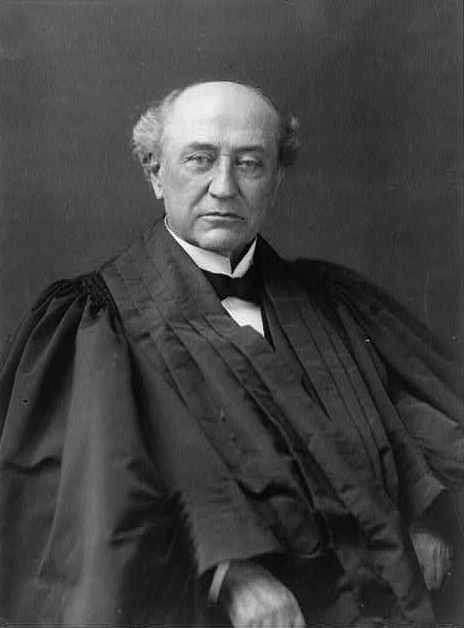
Justice David Josiah Brewer entered the world on June 20, 1837, beginning a life that would reshape American constitutional law. Brewer served on the Supreme Court from 1890 to 1910, a twenty-year tenure marked by his defense of property rights and his skepticism toward government regulation of business.
Brewer, a Republican appointee of President Benjamin Harrison, emerged as a leading voice for laissez-faire constitutionalism during the Gilded Age. He authored opinions that struck down state and federal laws attempting to regulate commerce and labor conditions, viewing such measures as violations of due process and individual liberty. His jurisprudence reflected the prevailing conservative doctrine of the era, which prioritized business freedom over social welfare legislation.
One of Brewer's most influential decisions came in United States v. Knight Co., where he limited the Commerce Clause's reach in ways that constrained federal power over interstate commerce for decades. He also championed the doctrine of "substantive due process," a legal theory that allowed courts to invalidate laws they deemed unreasonable, even when procedural safeguards existed.
Brewer's approach to constitutional interpretation dominated the Court during the 1890s and early 1900s, effectively blocking Progressive Era reforms. He opposed child labor regulations and minimum wage laws, viewing them as unconstitutional intrusions into contractual freedom. This judicial philosophy ultimately faced reversal following the New Deal era, when the Court abandoned substantive due process limitations on economic regulation.
His birthday marks a historical moment in American judicial conservatism. Brewer's legacy demonstrates how judicial ideology shapes constitutional interpretation. Courts led by justices skeptical of government intervention produce doctrines favoring business interests over worker protections and social programs. His tenure illustrates the deep connection between judicial appointments, constitutional theory, and the scope of government power to address social problems.