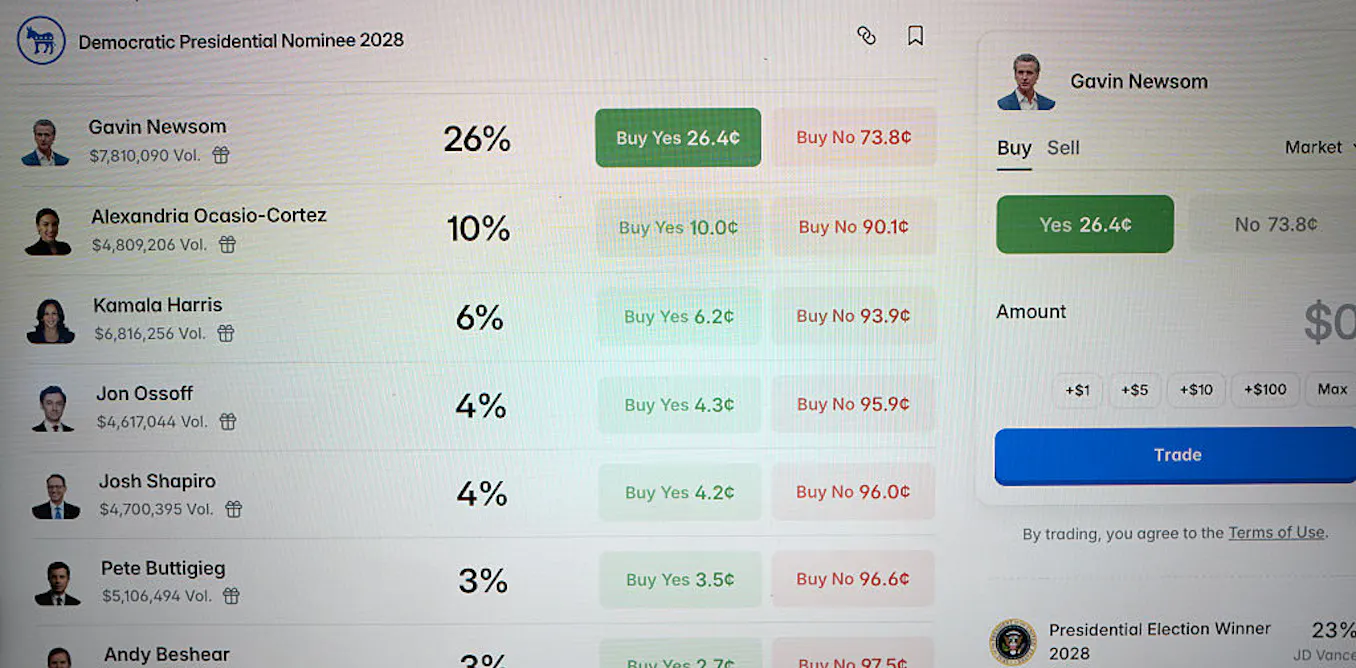
Prediction markets have exploded in popularity, but regulators and political observers now worry these platforms create avenues for insider trading and unethical wagering tied directly to electoral outcomes. The concern centers on campaign operatives betting on their own candidates' performance, raising questions about conflicts of interest and market manipulation.
These platforms allow users to trade contracts based on political events. Participants essentially bet money on outcomes like election results, policy decisions, or legislative votes. The markets operate with minimal oversight, operating largely outside the regulatory frameworks that govern traditional financial markets.
The problem runs deeper than casual political betting. Campaign staff members possess non-public information about polling data, voter outreach effectiveness, and internal campaign strategy. When these insiders place bets on their candidate's chances, they gain unfair advantages over ordinary traders. Such activity constitutes a form of insider trading analogous to securities violations.
The unregulated nature of prediction markets creates additional concerns. Traditional stock exchanges operate under Securities and Exchange Commission oversight. Prediction markets largely escape this scrutiny. Users can wager on political outcomes with virtually no restrictions or transparency requirements. This regulatory gap invites bad actors to manipulate markets through strategic betting or information seeding.
The gamification element compounds the problem. By framing politics as entertainment with real money at stake, these platforms risk distorting the political process itself. Market prices can influence media narratives and voter perceptions. When large bets move market odds, journalists report the shifts as indicators of electoral momentum, potentially creating self-fulfilling prophecies.
Campaign finance law offers limited protection here. While direct campaign contributions face contribution limits and disclosure requirements, prediction market bets operate outside that framework. A campaign operative can legally bet unlimited amounts on their candidate's success without reporting the transaction to the Federal Election Commission.
Regulators face pressure to act. The Commodity Futures Trading Commission technically has authority over political prediction contracts, but enforcement remains sporadic