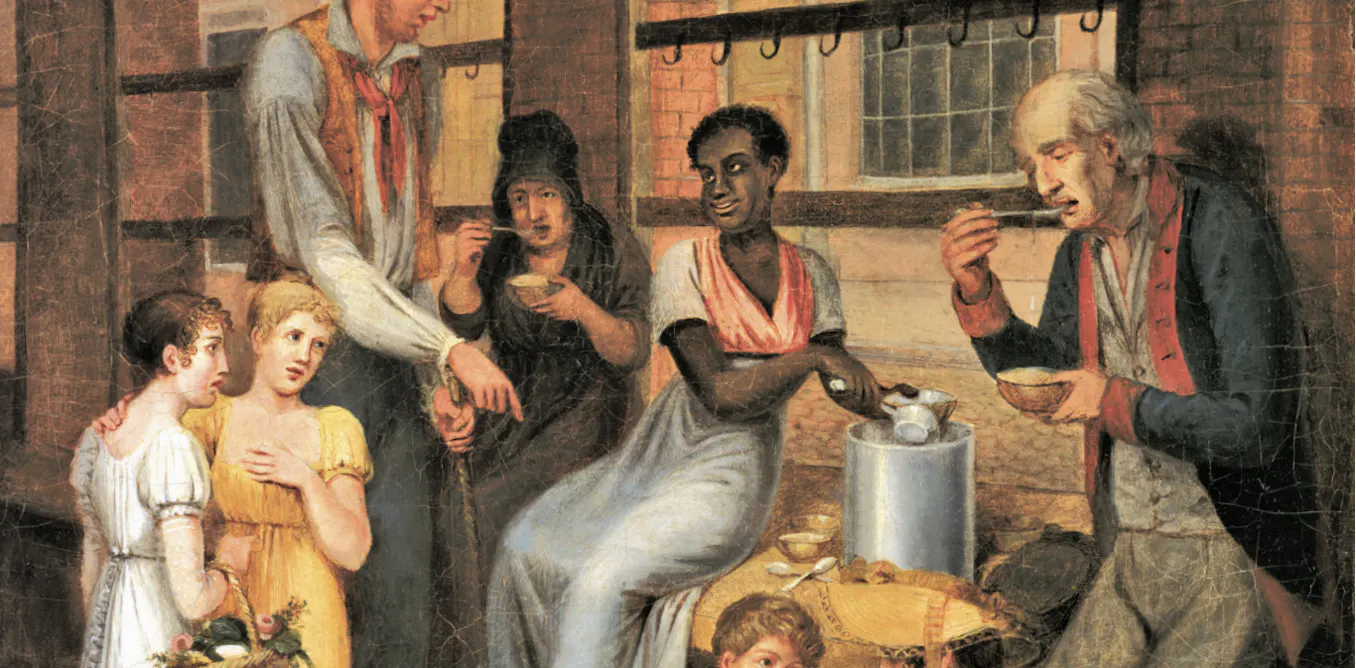
Dina, an enslaved woman, escaped bondage and carved out economic independence by selling pepper pot stew on Philadelphia's streets during the late 18th century. Her story illustrates how Black women in early America used street vending as a route to freedom and survival when enslaved people fled northern cities where slavery remained legal until gradual abolition took effect.
Pepper pot stew, a hearty mixture of tripe, vegetables, and spices, became iconic street food in Philadelphia. Enslaved and formerly enslaved Black women dominated this trade, hawking the stew to working-class residents and dock workers. The work offered several advantages for women seeking escape from bondage. Street vending required minimal startup capital, allowed workers to operate independently rather than under direct supervision, and provided cash income that could fund further flight or support resistance networks.
Dina's case reflects broader patterns in northern urban centers where slavery technically existed but operated differently than in southern plantations. Women like Dina exploited this gap. They could move through streets with relative freedom compared to enslaved people in southern rural areas. Once escaped, they blended into free Black communities, though enslavers pursued legal recapture efforts.
The pepper pot trade became so associated with Black women vendors that it functioned as a recognizable economic niche. This created informal networks of mutual aid and information sharing among vendors about enslavers' movements, safe routes, and community resources. The stew itself, made from inexpensive cuts of meat, represented both working-class survival and the entrepreneurial agency of women facing extreme constraints.
Dina's story, documented through historical records of her enslaver's attempts to recapture her, demonstrates how individual women resisted bondage through economic action rather than dramatic escape narratives. Her persistence in Philadelphia selling pepper pot while remaining fugitive shows how Black women built lives of relative autonomy within the constraints of northern