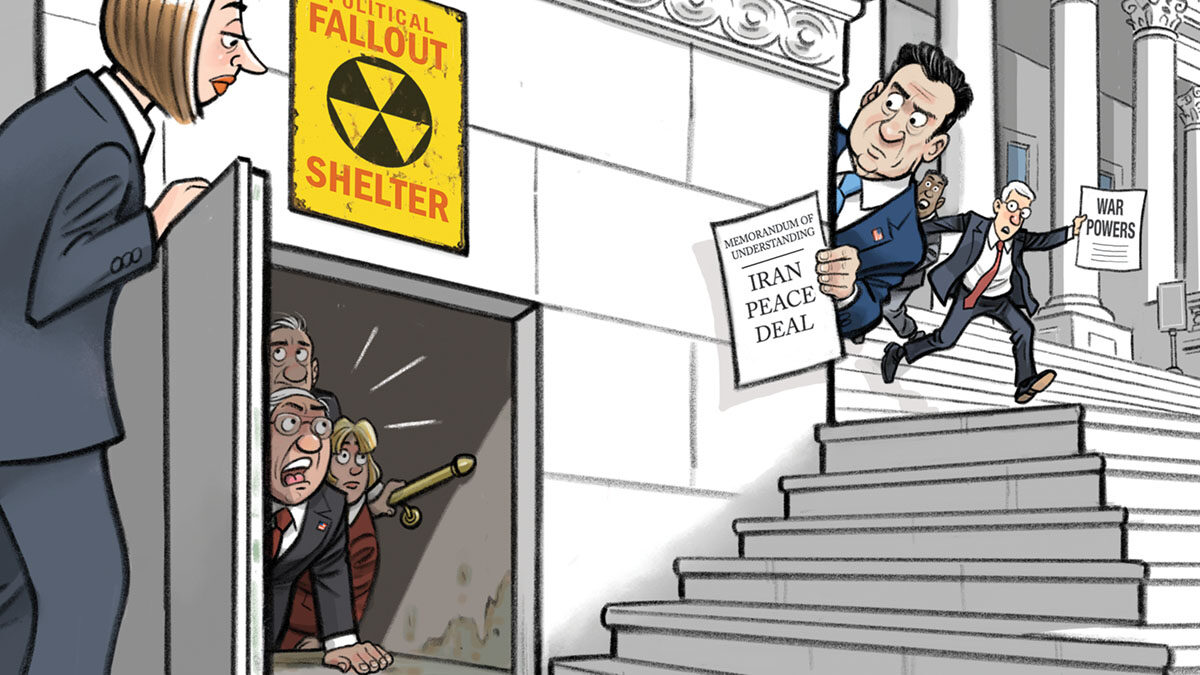
# Capitol Ink | Fallout Shelter
Congress faces mounting pressure to address nuclear preparedness as lawmakers grapple with Cold War-era fallout shelter infrastructure on Capitol Hill. The congressional complex, built with bunkers designed decades ago, now confronts questions about whether its protective systems remain functional for modern threats.
The Capitol building contains tunnels and underground spaces constructed during the 1960s as part of broader federal civil defense planning. These facilities were designed to protect members and staff during nuclear attack scenarios. However, maintenance records and structural assessments reveal aging systems that may not meet current safety standards.
Republican and Democratic leaders have begun requesting briefings from the Capitol Police and the Architect of the Capitol on the condition of emergency shelters beneath the legislative chambers. The discussions come amid heightened geopolitical tensions and renewed focus on government continuity during national emergencies.
The Capitol's fallout infrastructure sits alongside other critical vulnerabilities. The complex faces ongoing security concerns following the January 6 breach, which exposed gaps in perimeter defenses and emergency protocols. Adding nuclear preparedness to this list compounds the challenges facing Capitol officials.
The Architect of the Capitol has authority over maintenance and upgrades to congressional facilities. Initial assessments suggest that some shelter systems require modernization, including air filtration systems and structural reinforcements. Cost estimates for comprehensive upgrades remain under review.
Congressional leadership has not committed to a timeline for improvements. Budget constraints and competing facility needs complicate prioritization decisions. Some lawmakers argue that updating Cold War-era bunkers reflects responsible governance, while others question whether taxpayer resources should fund nuclear shelter upgrades.
The situation illustrates broader federal preparedness gaps. While Congress addresses its own shelter systems, federal agencies managing civilian nuclear preparedness face similar challenges with aging infrastructure. The discussion signals renewed congressional attention to continuity of government planning after years of relative inattention to such scenarios.