# Political Leaders Use Combat Spectacles to Assert Power and Meaning
Combat spectacles have long served as arenas where political leaders shape national identity and project power. The comparison between Roman gladiatorial games and modern mixed martial arts reveals how physical contests function as moral narratives about sacrifice, strength, and national character.
In ancient Rome, gladiatorial games were state-sponsored events where emperors demonstrated control over life and death while entertaining the masses. Spectators witnessed ritualized violence that reinforced hierarchies and state authority. The crowds gathered not merely for entertainment but to participate in a civic act that validated the political order.
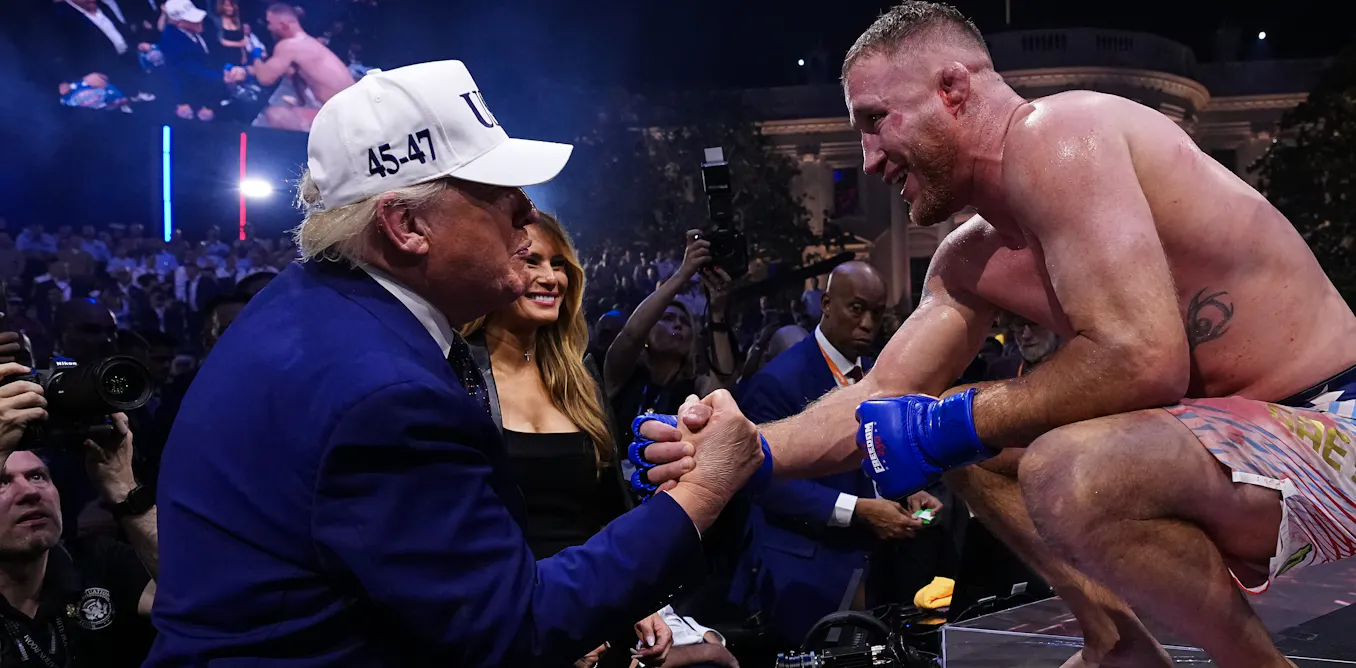
Today's combat sports operate similarly in the political sphere. Mixed martial arts competitions attract massive viewership and corporate sponsorship, creating opportunities for political messaging. Right-wing political figures have increasingly aligned themselves with combat sports culture, using fighters as symbols of strength, resilience, and nationalist values.
This alignment reflects deeper patterns in how modern leaders use spectacle to communicate ideology. Combat sports celebrate individual will, toughness, and victory in zero-sum competitions. These themes resonate with conservative political messaging that emphasizes personal responsibility and national greatness.
The moral dimension proves crucial. Both gladiators and modern fighters are portrayed as individuals pushing beyond human limits through discipline and sacrifice. Political leaders leverage this narrative to frame their agendas as demands for national sacrifice and strength. When politicians appear alongside prominent fighters or adopt combat sport imagery, they connect their policies to virtues of toughness and determination.
The phenomenon reflects how political communication operates through symbols and spectacle rather than policy explanation. Voters absorb messaging through the cultural narratives embedded in entertainment and sport. Combat spectacles offer particularly potent symbols because they depict human struggle in its most visceral form.
This use of combat spectacles transcends mere theater. It shapes how citizens understand political leadership itself. When leaders associate with fighters and fighting culture, they claim