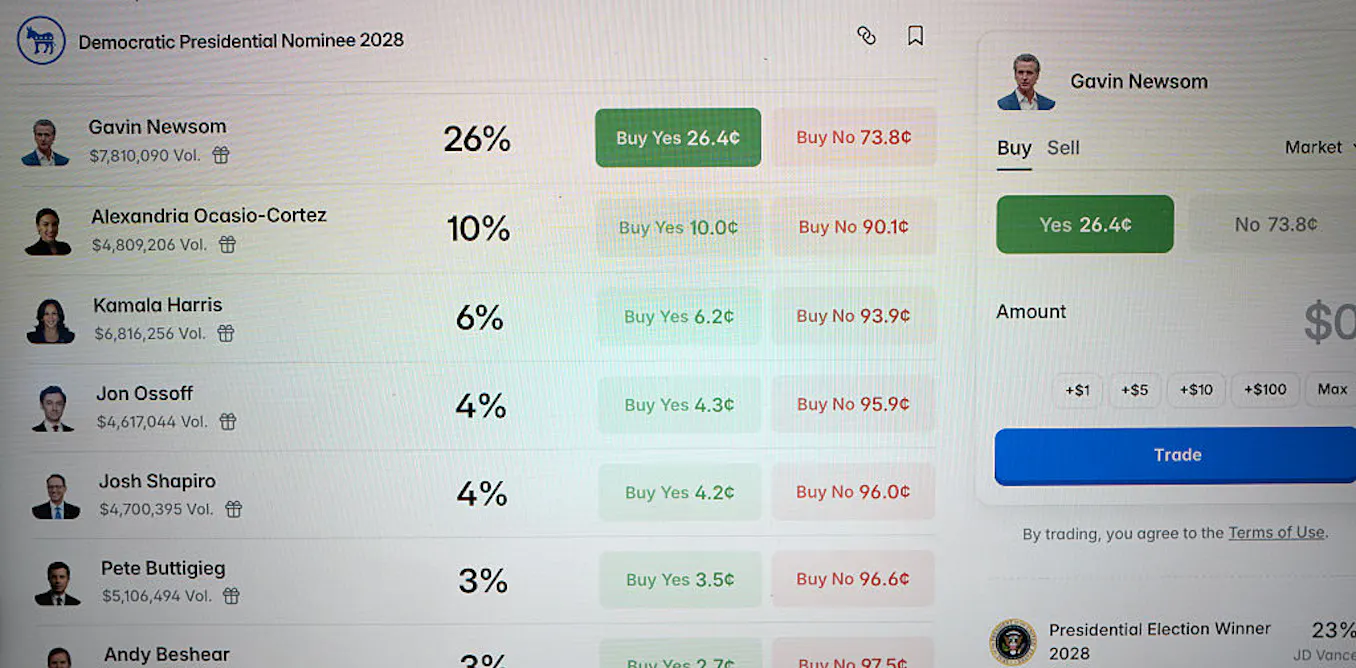
Prediction markets have surged in popularity as platforms like Polymarket and others allow users to bet real money on political outcomes. The growth has triggered serious regulatory concerns, particularly around insider trading and ethics violations in political campaigns.
Campaign staff members have placed bets on their own candidates' electoral performance, creating conflicts of interest that existing financial regulations do not adequately address. These trades potentially exploit non-public information about campaign strategy, polling data, and voter outreach that staffers possess before the general public.
The regulatory gap exists because prediction markets operate in a gray zone. The Commodity Futures Trading Commission has limited jurisdiction, and most prediction markets exist beyond traditional financial oversight. Unlike stock markets governed by the Securities and Exchange Commission, these platforms face minimal disclosure requirements or trading restrictions tied to insider information.
The stakes extend beyond individual bets. When campaign operatives trade on their own races, they create perverse incentives. A staffer might prioritize short-term betting profits over long-term campaign strategy. The practice also erodes public trust in elections when voters learn that people running campaigns are simultaneously gambling on outcomes.
The normalization of prediction markets as entertainment masks a deeper problem. Framing political bets as a "game" obscures how actual market manipulation could occur. Campaign insiders could theoretically leak information to swing prices in their favor before disclosing it publicly, generating profits from knowledge gaps.
Some prediction markets claim self-regulation through user agreements that ban insider trading. These mechanisms lack teeth. Enforcement depends on platforms identifying violations themselves, and proving someone used non-public information remains difficult without subpoena power or regulatory oversight.
The broader concern involves prediction markets' influence on political coverage and voter behavior. When major media outlets cite betting odds as indicators of electoral probability, they amplify these markets' visibility and legitimacy. This feedback loop could distort how Americans understand race competitiveness.
Congress has not yet addressed prediction