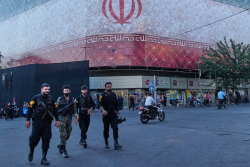
The United States has brokered an agreement that establishes a framework for future negotiations with Iran, shifting responsibility to Israel and Lebanon to manage regional tensions. The deal represents a pullback from direct military confrontation despite Iran's recent aggressive actions, including its seizure of the Strait and detention of American assets.
The agreement reflects the Biden administration's preference for diplomatic channels over military escalation. Rather than pursue the military advantage the U.S. held, officials opted to create conditions for sustained dialogue. This approach transfers the burden of enforcing compliance and preventing future hostilities to regional actors who bear the immediate consequences of Iranian expansion and proxy activity.
Israel faces pressure to contain Hezbollah's operations from Lebanese territory while managing its own security concerns. Lebanon must navigate its complex relationship with Iranian-backed militant groups that control significant political influence within the country. Both nations now bear responsibility for ensuring the agreement produces lasting peace rather than serving as a temporary pause in hostilities.
Iran's government, which the U.S. designates as a state sponsor of terrorism, maintains its historical pattern of regional interference through proxy forces. The deal does not require Iran to cease support for militant groups or abandon its geopolitical ambitions. Instead, it creates negotiation pathways that leave fundamental disputes unresolved.
Critics argue the administration abandoned military leverage at a critical moment. Supporters contend that diplomatic frameworks offer the only viable path to sustainable peace when military options risk broader regional conflict.
The agreement's success depends entirely on execution by parties with competing interests and limited trust. Israel and Lebanon must coordinate responses to Iranian provocations while managing their own bilateral tensions. Any breakdown in this arrangement could quickly escalate toward the military confrontation the deal was designed to prevent.