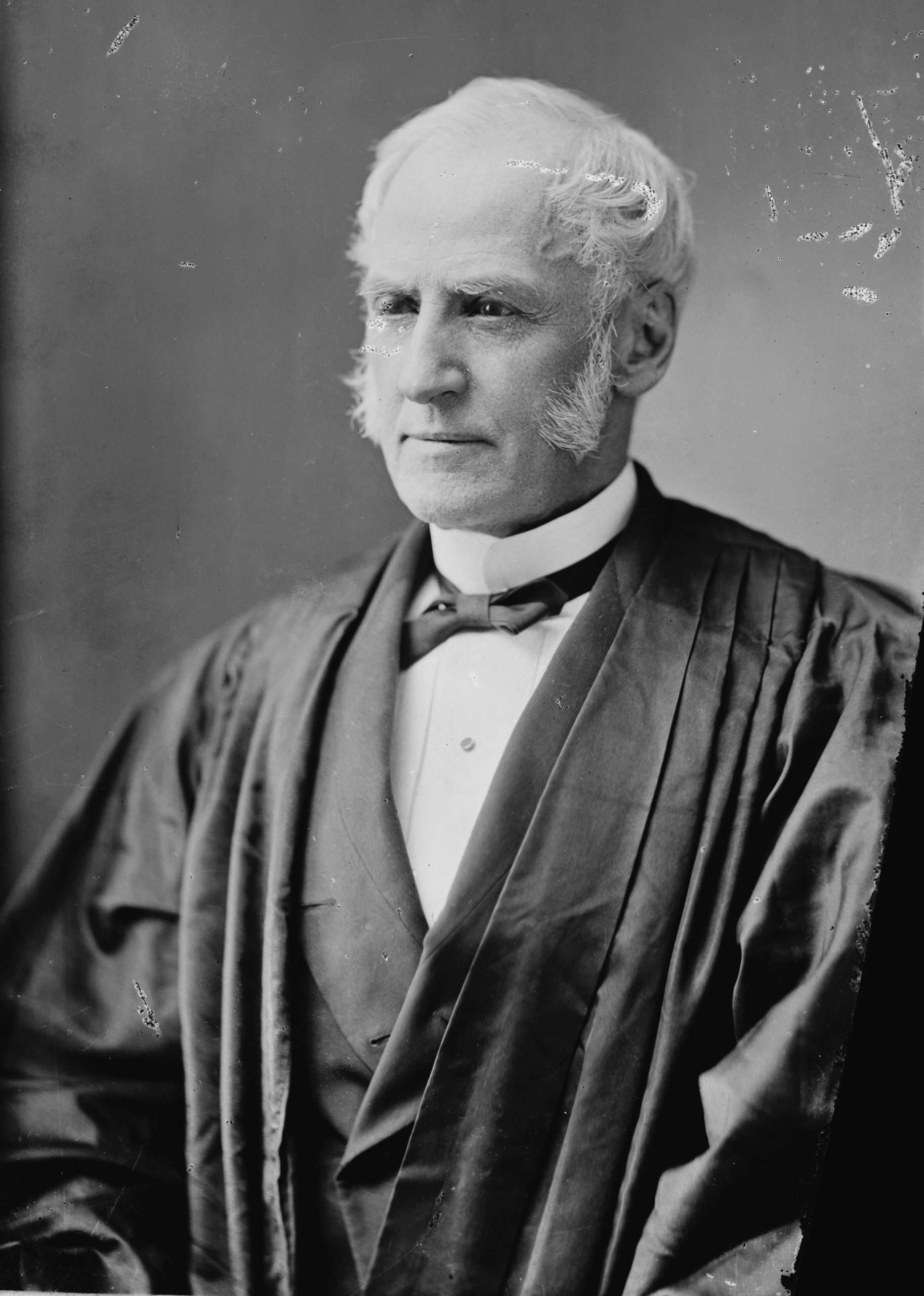
Justice Ward Hunt was born on June 14, 1810. Hunt would later serve on the U.S. Supreme Court, bringing his legal expertise to the nation's highest bench during a formative period of American jurisprudence.
Hunt's judicial career reflected the intellectual currents of the nineteenth century. He ascended to the Supreme Court when the institution was still establishing its role within the constitutional framework. His tenure contributed to the Court's development as an independent branch of government capable of checking legislative and executive power.
The Supreme Court in Hunt's era faced questions about federalism, the scope of congressional authority, and the limits of state power. Hunt participated in decisions that shaped how courts interpreted the Constitution and statutes. His work occurred during a time when the Court was consolidating its authority following Chief Justice John Marshall's landmark rulings that established judicial review.
Hunt's birth in 1810 placed him within a generation of jurists who witnessed the nation's expansion, the Civil War, and Reconstruction. These events tested constitutional principles and required the Court to address questions about the scope of federal power, the rights of citizens, and the structure of federalism itself.
The celebration of justices' birthdays marks moments in the Court's institutional history. It reminds observers that the Supreme Court operates through individuals who bring their own legal philosophies and interpretive approaches to the bench. Hunt's long life and service spanned transformative decades in American constitutional law, making him a figure whose contributions merit recognition in the historical record of the judiciary.