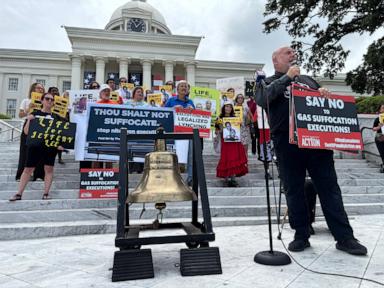
The Supreme Court rejected Alabama's request to execute Kenneth Eugene Smith using nitrogen gas, allowing his execution by lethal injection instead. Smith's case marks the first time the nation's highest court has addressed the constitutionality of nitrogen hypoxia as an execution method.
Alabama sought to use nitrogen gas as an alternative after Smith's legal team raised concerns about lethal injection, arguing the state's execution protocols could cause unnecessary suffering. Nitrogen hypoxia works by replacing oxygen in the lungs, causing death through asphyxiation. Supporters claim the method is more humane than traditional lethal injection because it avoids potential complications with intravenous drug administration.
The court's rejection was brief and unsigned, offering no written opinion explaining the justices' reasoning. This procedural move left open the constitutional question of whether nitrogen gas executions violate the Eighth Amendment's prohibition on cruel and unusual punishment. Conservative and liberal justices alike have previously expressed skepticism about novel execution methods, though for different reasons.
The case carries broader implications for capital punishment in America. Oklahoma and Mississippi have authorized nitrogen hypoxia executions, and other states may seek approval as legal challenges to lethal injection mount. Courts have increasingly scrutinized lethal injection protocols, particularly whether states can secure necessary drugs as pharmaceutical companies restrict sales for executions.
Smith's death sentence stems from a 1989 murder conviction. His attorneys had argued that Alabama's lethal injection procedures posed substantial risks of severe pain. The state countered that nitrogen gas represented an effective alternative that satisfied constitutional requirements.
The Supreme Court's silence on the merits disappoints neither side decisively. Death penalty opponents saw the rejection as validation that untested methods warrant skepticism. Execution-supportive states viewed it as preserving their authority to determine execution procedures without federal micromanagement.
The decision leaves lower courts to resolve nitrogen gas execution challenges case by case, ensuring the constitutional debate