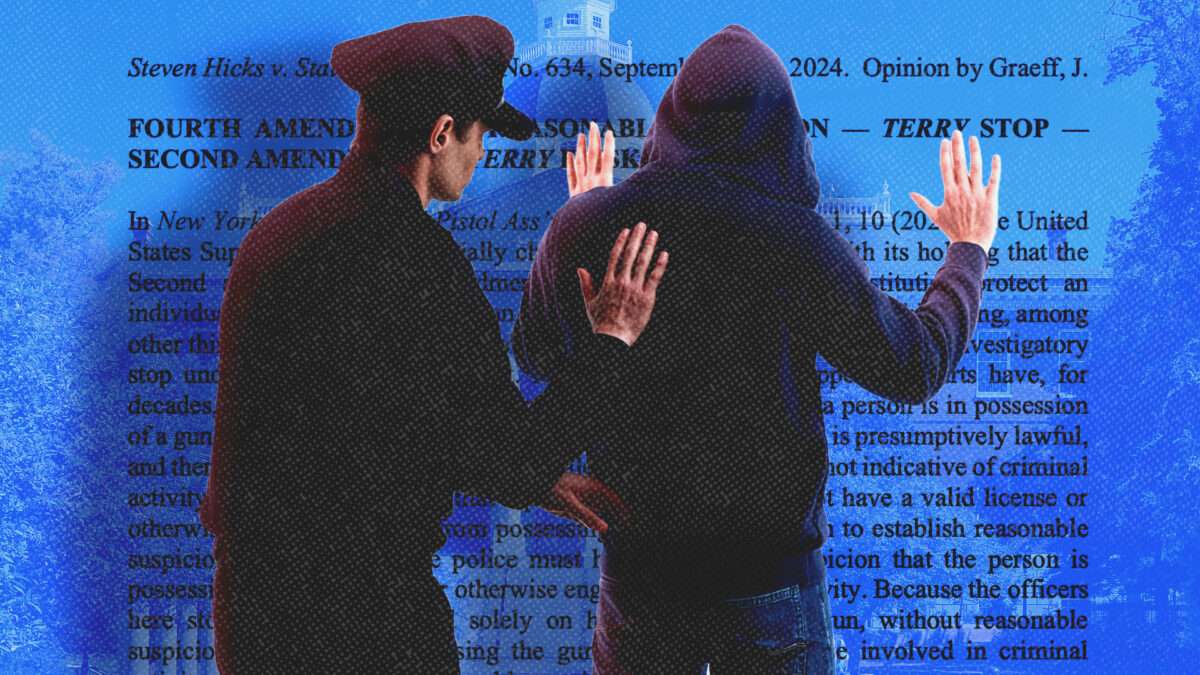
Maryland's highest court handed gun owners a decisive victory by ruling that police cannot stop and frisk citizens based solely on suspicion of firearm possession. The state Court of Appeals issued a unanimous decision that such stops violate the Fourth Amendment's protections against unreasonable search and seizure.
The ruling directly challenges a police practice that has enabled officers to conduct warrantless searches on individuals suspected of carrying guns without requiring traditional probable cause or reasonable suspicion of criminal activity. The court determined that merely possessing a firearm, which is legal in Maryland, does not provide adequate grounds for an officer to initiate a stop.
This decision carries major implications for law enforcement across the state. Police departments will now face stricter constraints on initiating contact with citizens based on gun-carrying suspicions alone. Officers must establish independent, articulable facts suggesting criminal conduct beyond the suspected presence of a weapon.
The unanimous nature of the ruling strengthens its authority and suggests broad judicial consensus that the previous standard created constitutional problems. It reflects growing judicial skepticism toward stop-and-frisk policies that disproportionately affect certain communities while yielding minimal public safety gains.
Gun rights advocates view the decision as a vindication of Second Amendment principles and Fourth Amendment protections working in tandem. The ruling protects law-abiding gun owners from harassment and arbitrary police encounters while maintaining police authority to stop individuals based on legitimate criminal suspicion.
Maryland joins other jurisdictions reassessing stop-and-frisk practices in recent years. The decision likely influences how state law enforcement trains officers and establishes policies governing traffic stops and street encounters. Federal courts have increasingly scrutinized these practices as well, with similar constitutional concerns raised in multiple circuits.
The ruling does not prevent police from stopping individuals for other lawful reasons or from conducting frisks when they observe independent signs of criminality. It simply closes a loophole that permitted stops based on the suspicion of