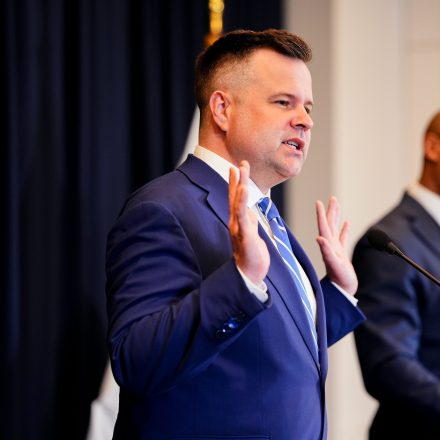
House Democratic leader Hakeem Jeffries joined other Democratic leaders in opposing an extension of the Foreign Intelligence Surveillance Act, reversing the party's typical stance on domestic surveillance powers. The shift came as centrist Democrats broke ranks with their leadership and voted against renewing the controversial law.
Civil liberties advocates praised the Democratic reversal but cautioned that opposing FISA extension remained incomplete without blocking it entirely, regardless of who leads the intelligence apparatus. The debate centered on whether the law should expand, contract, or remain unchanged.
FISA has long divided Democrats. Civil liberties progressives argue the law enables mass surveillance that violates Fourth Amendment protections. National security hawks defend it as essential for counterterrorism operations. Jeffries' public opposition to extension represents a notable shift from prior Democratic support for surveillance authorities.
The unexpected pivot by centrist Democrats complicated the legislative math in the House. Their defection left Republicans without Democratic votes they had counted on to pass extension measures. Bill Pulte's name surfaced in connection with intelligence leadership, though details remained sparse.
Surveillance reform advocates used the moment to push for restriction rather than renewal. They viewed the Democratic reversal as tactical opportunity but not genuine commitment to limiting spy powers. The group warned that extending FISA, even under different leadership, perpetuates systems they view as fundamentally undemocratic.
The split reflected broader tensions within the Democratic caucus. Progressive members have consistently opposed FISA reauthorization. Leadership traditionally deferred to national security consensus. Jeffries' stance suggested political calculation that opposition plays better with the base heading into the next election cycle.
Republican leaders pushed forward with extension efforts, suggesting the party would attempt passage without Democratic support or seek compromise language that addressed some privacy concerns while preserving core surveillance capabilities. The outcome would test whether Democrats maintained their newfound opposition or returned to historical patterns of supporting security measures with minor modifications.
CATEGORY