# Summary
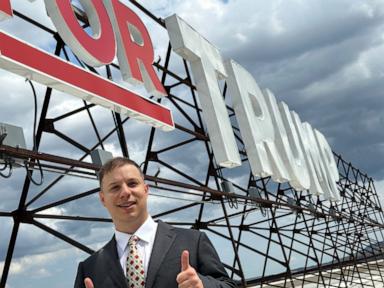
A Republican candidate hopes to leverage President Donald Trump's public endorsement into a congressional seat. The candidate gained prominence through a large pro-Trump sign that caught the attention of the president, resulting in social media praise and public recognition from Trump himself.
Trump's endorsement carries substantial weight in Republican primary contests. Candidates who secure the president's backing gain access to his devoted base of supporters and benefit from the amplification effect of his media presence and online platform. Trump has shown willingness to recruit candidates and actively campaign for those he favors, transforming local or regional figures into nationally recognized contenders.
However, converting Trump's praise into electoral victory presents challenges. Primary success requires organizational infrastructure, fundraising capability, and ground-level campaign operations. A viral moment or social media attention, while valuable for name recognition, does not automatically translate to winning a congressional race. The candidate must demonstrate policy knowledge, constituency service experience, and the ability to build a functional campaign apparatus.
This case reflects the broader dynamic within the Republican Party since Trump's political ascendancy. GOP officeholders and candidates have made alignment with Trump a central political strategy. Primary voters in many districts show strong preference for candidates Trump publicly supports. Yet the party remains diverse enough that local issues, incumbent advantage, and candidate quality continue to matter.
The outcome of this particular race will indicate whether a Trump endorsement alone, combined with grassroots visibility, suffices to win a congressional primary. If successful, it demonstrates Trump's continued influence over Republican candidate selection. If unsuccessful, it suggests that viral moments and presidential praise, while helpful, cannot overcome traditional campaign deficiencies.