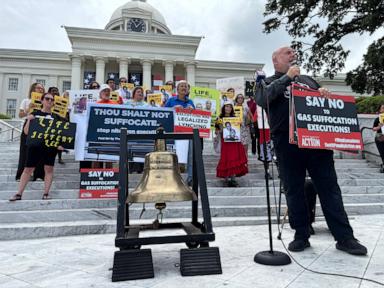
Alabama has asked a federal appeals court to allow it to proceed with executing a death row inmate using nitrogen gas on Thursday night. The state's request comes as legal challenges mount against the experimental execution method.
The case centers on Kenneth Eugene Smith, who faces execution under Alabama's relatively new nitrogen hypoxia protocol. The state introduced nitrogen gas executions in 2018 as an alternative to lethal injection, positioning the method as potentially more humane than traditional execution approaches.
Smith's legal team has challenged the nitrogen gas procedure on constitutional grounds, arguing it violates protections against cruel and unusual punishment under the Eighth Amendment. The appeals have delayed the execution multiple times in recent weeks.
Alabama Department of Corrections officials have maintained that nitrogen hypoxia represents a viable execution method that minimizes suffering. The state has prepared execution protocols and claims the procedure will render the inmate unconscious before death occurs.
This execution attempt reflects a broader trend among death penalty states experimenting with alternative methods as lethal injection drug supplies become increasingly difficult to obtain. Oklahoma previously executed an inmate using nitrogen gas in 2024, marking the first such execution in the United States. However, that execution faced criticism from medical professionals and death penalty opponents who questioned whether the procedure caused unnecessary pain.
Federal courts have considered competing arguments about whether nitrogen gas executions constitute unconstitutional punishment. Legal experts have debated the scientific basis for claims that the method operates painlessly, with some raising concerns about potential complications during execution.
The Alabama case highlights ongoing tensions between states' rights to determine execution methods and federal constitutional protections. As Smith's execution deadline approaches, the federal appeals court faces pressure to rule quickly on the state's request while considering the constitutional questions raised by his legal team.