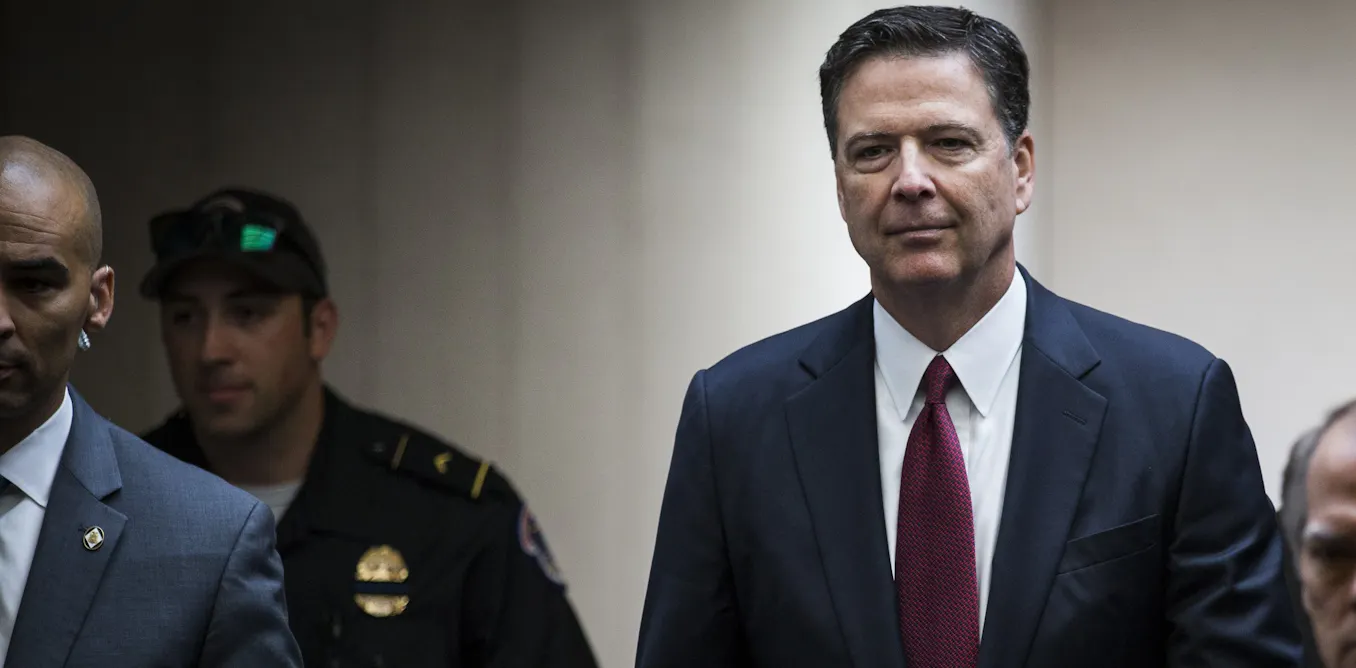
Former FBI Director James Comey faces potential criminal charges over an Instagram post containing the cryptic message "86 47"—a reference prosecutors interpret as a call to action against former President Donald Trump, whose number as president was 47.
The post sits in contested legal terrain. Constitutional scholars debate whether the message constitutes a genuine criminal threat or falls within protected political speech. The First Amendment shields considerable hyperbolic and inflammatory rhetoric, particularly when directed at public figures. Courts have historically required prosecutors to prove a "true threat"—a serious intent to inflict harm, not mere political passion.
Comey's defenders argue the post qualifies as political expression protected by the Constitution. The message is vague enough to invite multiple interpretations. Restaurant industry slang uses "86" to mean "remove from the menu" or "no longer available," suggesting Comey simply expressed opposition to Trump's potential return to power. No specific threat of violence appears in those two numbers.
Federal prosecutors counter that the message amounts to an implicit call for violence or removal of a political figure. In their view, the combination of "86" and "47" crosses from criticism into actionable threat territory. The charges reflect broader tensions over how criminal law treats political speech during heated partisan moments.
The legal distinction turns on speaker intent and reasonable recipient interpretation. Courts examine context, tone, and whether listeners would understand an actual threat versus rhetorical excess. Comey's post offers little explicit language, complicating the prosecution's burden.
This case exposes the murky boundary between protected discourse and criminal conduct. Democratic prosecutors pursuing charges against a prominent Republican critic raise symmetrical concerns about political weaponization of law enforcement. Republicans cite selective prosecution. The outcome will test how courts balance free speech protections against law enforcement's duty to investigate genuine threats, particularly involving former presidents.