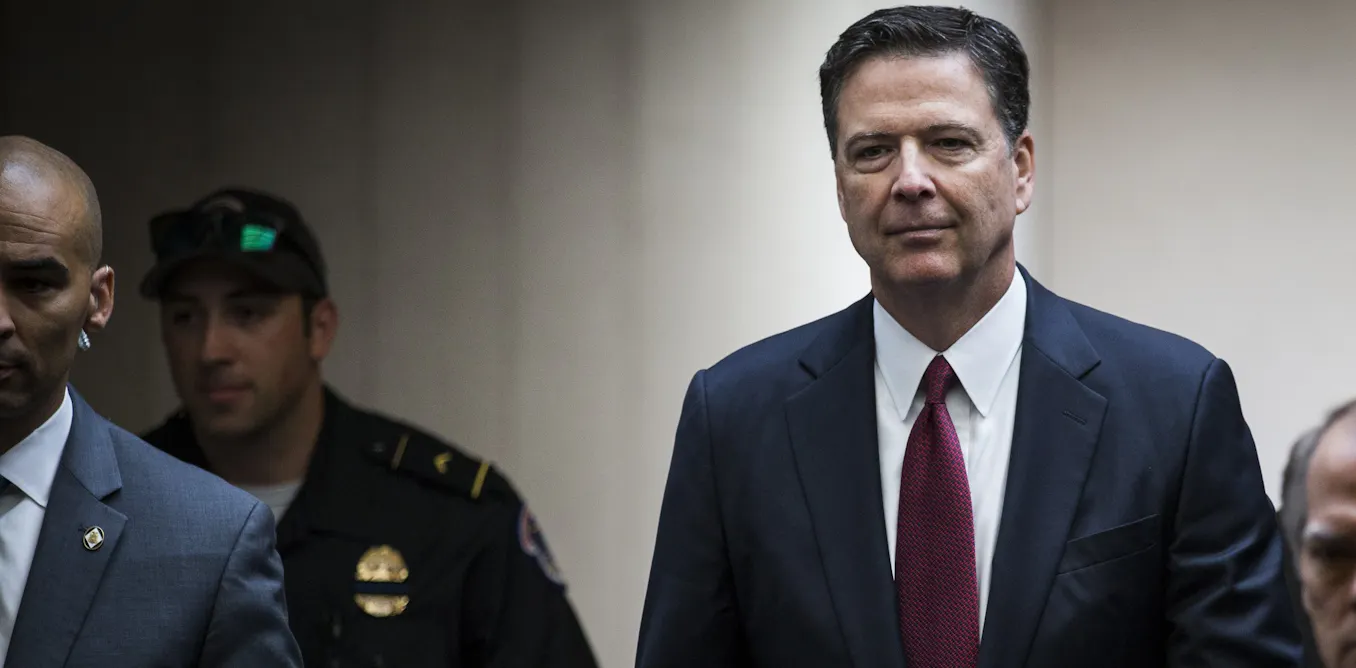
Former FBI Director James Comey faces potential criminal charges over an Instagram post reading "86 47," a cryptic reference prosecutors interpret as a threat against former President Donald Trump. The numbers allegedly encode a message: 86 meaning "remove" and 47 referring to Trump as the 47th president.
Legal scholars wrestling with the case highlight a genuine constitutional tension. The First Amendment protects robust political speech, including harsh criticism and hyperbolic statements about public figures. Courts have consistently held that vague or ambiguous statements receive stronger protection than explicit calls for violence.
Comey's post sits in murky legal territory. Prosecutors must prove beyond reasonable doubt that the message constitutes a "true threat," the legal standard established in Brandenburg v. Ohio and refined through decades of case law. A true threat requires the speaker to communicate a serious intent to commit an act of violence against an identifiable person.
The ambiguity cuts both ways. Defenders argue that "86 47" is oblique enough to qualify as political speech protected by the First Amendment. The post lacks direct language calling for harm. It could reasonably be read as commentary on removing Trump from political consideration in 2024 or beyond.
Prosecutors counter that context matters. Comey posted during a period of heightened political tension following January 6th, when violent rhetoric carried different weight. They may argue that a former law enforcement official understood the potential impact of his words and chose them deliberately.
The case tests how courts balance free speech protections against legitimate concerns about incitement. If conviction requires only that a reasonable person could interpret the post as threatening, the bar becomes dangerously low for prosecution. If conviction requires explicit intent to incite imminent violence, prosecutors face an uphill climb with coded language.
Constitutional scholars note this case will likely reach appellate courts, where the judiciary must clarify whether cryptic political statements about removing political figures qualify