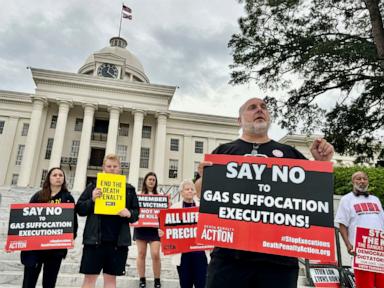
A federal judge upheld Alabama's use of nitrogen gas as a method of execution, rejecting constitutional challenges to the controversial practice. The ruling clears the way for Alabama to proceed with nitrogen hypoxia executions, a method that causes death by replacing oxygen with nitrogen in the condemned person's bloodstream.
The decision follows Alabama's 2022 authorization of nitrogen gas as an execution method, making it the first state to legally adopt this approach. Death penalty opponents and civil rights groups have argued the technique violates the Eighth Amendment's prohibition on cruel and unusual punishment, citing concerns about potential suffering and the lack of peer-reviewed evidence on the method's effects.
The federal court rejected these arguments, finding that Alabama's nitrogen execution protocol meets constitutional standards. The ruling represents a victory for state officials defending capital punishment practices against evolving legal challenges.
Nitrogen gas executions remain deeply contested in legal and medical circles. Opponents worry the method could cause prolonged suffocation and conscious awareness during death. Proponents, including Alabama officials, argue it provides a more reliable alternative to lethal injection, which has faced its own constitutional scrutiny due to problems with vein access and drug administration.
The decision carries implications for other states considering similar methods. At least one other state has explored nitrogen execution protocols, watching Alabama's legal battles closely.
The ruling comes amid broader national debate over capital punishment methods. Federal courts have increasingly scrutinized lethal injection protocols, leading some states to revisit or revive older execution techniques like electrocution and gas chambers. This decision suggests courts may permit states wider latitude in choosing execution methods, even novel ones.
Death penalty opponents vow to continue legal challenges, including potential appeals to higher courts. The case will likely reach appellate courts and possibly the Supreme Court, which maintains jurisdiction over Eighth Amendment execution claims.