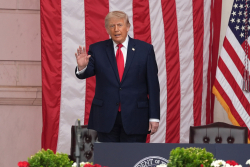
Republicans have consolidated around a coherent set of policy priorities in recent years, with immigration restriction emerging as a defining issue that distinguishes the party from Democrats. The GOP has sharpened its message on what it seeks to preserve: national sovereignty, border security, and a particular vision of American identity and culture.
This focus reflects a broader strategic clarity within the Republican Party. Unlike Democrats, who struggle to articulate a unified agenda beyond opposition to Republican initiatives, Republicans have built a platform centered on concrete goals. Immigration restriction tops the list, with party leaders from Donald Trump to Senate Republicans consistently emphasizing border enforcement and reduced legal immigration flows.
The party's messaging extends beyond immigration to encompass economic policies, law and order, and traditional values. Republicans frame these positions as fundamentally conservative in nature: protecting existing American institutions, citizens, and economic interests from external and internal threats.
Democrats, by contrast, operate with a more fragmented coalition. Progressive and centrist wings clash over economic redistribution, environmental regulation, and cultural issues. The party's messaging often emphasizes resistance to Republican proposals rather than a proactive governing vision. This reactive posture weakens Democratic unity and makes the party appear less decisive to voters evaluating leadership.
Republicans' advantage lies in answering a clear question: what are we conserving? The answer involves borders, traditional institutions, and economic nationalism. Democrats struggle with the inverse question: what are we building? Answers range from expanded social programs to racial equity initiatives to climate action, but these rarely coalesce into a single coherent narrative.
This strategic gap carries electoral consequences. Voters reward parties with clear messages and unified direction. Republicans' ability to maintain message discipline around immigration and cultural issues gives them a structural advantage in persuading swing voters. Democrats' internal divisions over economic policy, identity politics, and the role of government in citizens' lives dilute their appeal.
The 2024 political landscape will likely reflect these asymmet