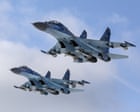
A Russian Su-27 jet flew within six metres of an unarmed RAF Rivet Joint reconnaissance aircraft over the Black Sea, prompting Defence Secretary John Healey to condemn the incident as "dangerous and unacceptable."
The Russian fighter conducted six aggressive passes in front of the RAF spy plane while it traveled at 500mph, creating a collision hazard that could have triggered a major diplomatic confrontation between London and Moscow. The encounter represents one of two similar mid-air incidents involving Russian jets and British aircraft last month.
These encounters reflect escalating tensions between NATO and Russia over airspace near conflict zones. The Black Sea remains a flashpoint for military activity, with both Russian and Western forces conducting frequent operations in the region. RAF reconnaissance missions monitor Russian military movements and provide intelligence to NATO allies, particularly given Russia's ongoing war in Ukraine.
Healey's direct condemnation signals the UK government's commitment to documenting and protesting what it views as reckless Russian military behavior. Such incidents fall into a pattern of close approaches that Russia has used to test NATO resolve and demonstrate power projection capabilities. The Su-27 is a Cold War-era fighter jet, yet remains a core component of Russian air defenses.
The RAF operates Rivet Joint aircraft from bases in Cyprus and the UK, with missions designed to gather signals intelligence across Eastern Europe and the Middle East. These unarmed planes carry no defensive systems and depend entirely on their ability to evade hostile action. A collision at those speeds would have been catastrophic for the British crew.
Britain's formal complaint follows similar incidents over the Baltic Sea and other NATO borders. The UK has strengthened its Eastern European presence in recent years, stationing fighter jets and ground forces across Poland and the Baltic states. Russia views these deployments as provocative, while NATO describes them as necessary responses to Russian aggression in Ukraine. The near-collision underscores the