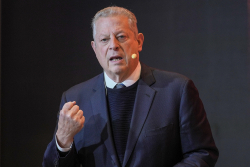
Al Gore's two-decade track record of climate predictions has become a lightning rod for critics who argue the former vice president consistently overstates the timeline and severity of environmental catastrophe.
Gore first gained prominence on climate issues with his 1992 book "Earth in the Balance" and later his 2006 documentary "An Inconvenient Truth," which warned of catastrophic consequences from rising sea levels and extreme weather. He predicted several specific outcomes with defined deadlines that have not materialized as described.
In 2009, Gore claimed Arctic sea ice would disappear within five to seven years. The Arctic still contains significant ice coverage today. He warned that New York City's West Side Highway would be underwater, that polar bears would face extinction, and that the planet faced a point of no return. These predictions shaped international climate policy conversations and influenced how governments prioritized environmental spending.
Gore's defenders argue he communicated the urgency needed to spur action on emissions reduction. They contend that while specific predictions missed their marks, the broader climate science consensus on human-caused warming remains solid. Climate scientists note that some of Gore's warnings about long-term trends like glacier melting and sea level rise align with actual observed data, even if specific dates proved inaccurate.
Critics counter that failed predictions undermine public trust in climate science itself. They point out that when specific forecasts don't come true on schedule, skeptics use those failures to dismiss all climate warnings as exaggeration. This dynamic, they argue, creates a credibility problem for mainstream climate advocates.
Gore has remained politically active on environmental issues, founding the Climate Reality Project and continuing to speak internationally about global warming. He won the Nobel Peace Prize in 2007, shared with the Intergovernmental Panel on Climate Change, recognizing his climate advocacy work.
The debate over Gore's accuracy reflects broader tensions in climate communication: balancing honest scientific assessment against