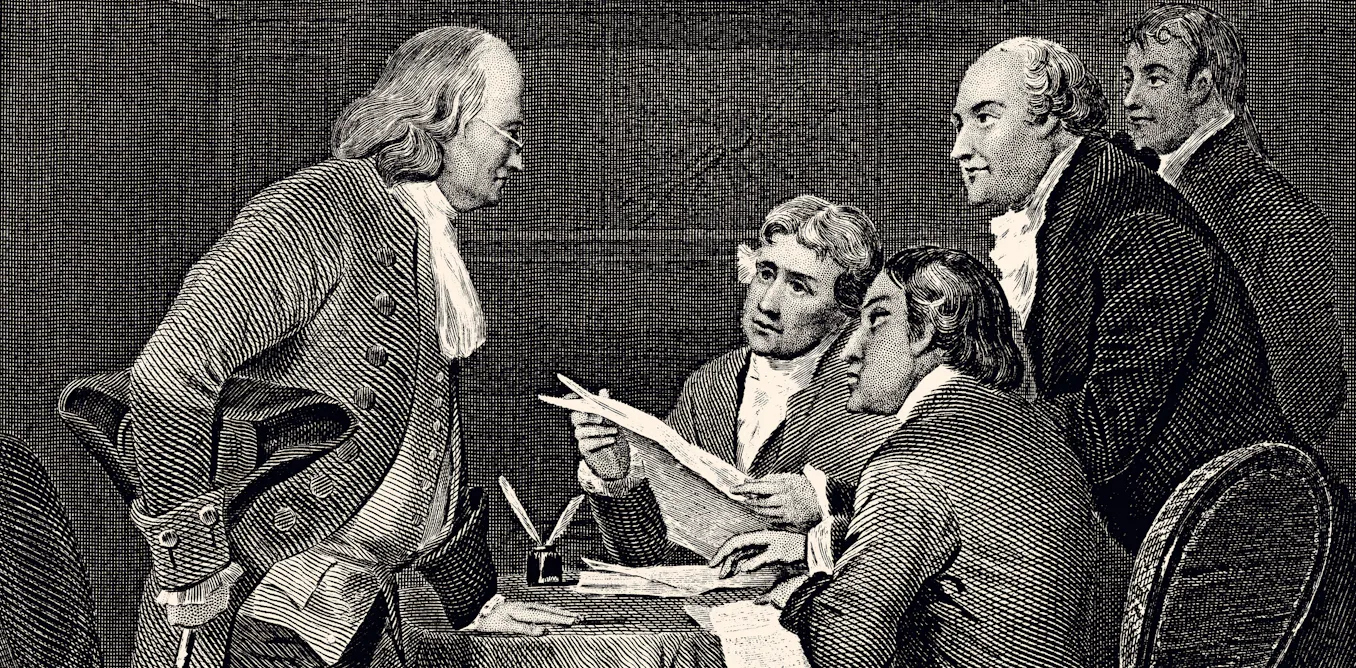
John Adams and Thomas Jefferson embodied a fundamental truth about the American founding: the architects of independence held deeply conflicting visions of what the Revolution meant.
Adams and Jefferson disagreed on the Revolution's purpose and scope. Adams believed the American Revolution represented a conservative political adjustment. He saw it as a corrective measure to restore proper constitutional balance, not a wholesale dismantling of existing social structures. Jefferson, by contrast, viewed the Revolution as a transformative event with expansive implications for human liberty and democratic governance.
These differences played out across decades of public service. Adams favored a strong executive and believed in the necessity of hierarchy in society. Jefferson championed popular sovereignty and feared concentrated power, particularly in a federal government. Their competing philosophies shaped early American policy on everything from the role of the presidency to the structure of the judiciary.
Despite their ideological gulf, Adams and Jefferson worked together when the nation's survival required it. Both served as president. Both helped craft foundational documents and policies. They recognized that disagreement on principle did not require personal animosity or political obstruction.
The two men reconciled late in life after years of estrangement. Their renewed correspondence in their final years reveals thinkers wrestling with their legacies and the meaning of what they had built. Even facing mortality, they maintained their positions while acknowledging the other's contributions to American independence.
Their example carries weight for contemporary politics. Adams and Jefferson demonstrate that substantial ideological differences need not prevent people from collaborating on shared objectives. The founding generation succeeded not through consensus on everything, but through the ability to work across genuine disagreement toward common goals.
The divergence between Adams and Jefferson reminds modern Americans that the Revolution itself was contested territory, interpreted and reinterpreted by its own architects.