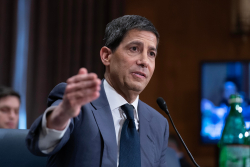
Kevin Warsh, President-elect Donald Trump's pick to lead the Federal Reserve, argues the central bank communicates excessively about economic conditions and policy decisions. Warsh, set to become Fed chair, contends that constant public statements from Fed officials create confusion and undermine the institution's effectiveness.
The criticism reflects a broader debate within Republican circles about Federal Reserve transparency and messaging. Warsh suggests that excessive commentary by Fed leaders and regional bank presidents muddies market signals and gives conflicting guidance to investors and businesses. His position contrasts with the modern Fed approach established under former chairs Ben Bernanke and Janet Yellen, who embraced detailed forward guidance and regular communication about monetary policy direction.
This stance carries real governance implications. The Fed traditionally operated with minimal public discussion of its decisions. However, the 2008 financial crisis prompted greater transparency as policymakers sought to manage market expectations and provide clarity during volatility. The Fed now holds regular press conferences, releases detailed policy statements, and coordinates messaging across multiple officials.
Warsh's incoming leadership signals potential shifts in how the Fed communicates with markets and the public. His argument essentially endorses less-is-more communication, suggesting Fed silence on certain economic matters could strengthen rather than weaken institutional credibility. This aligns with Trump's historical skepticism of the Fed's independence and communication practices.
The question carries practical weight for financial markets. Investors closely parse every Fed official's word for hints about rate decisions. Reducing that chatter could theoretically limit speculation and volatility. But it could also decrease market confidence and create uncertainty about monetary policy direction.
Warsh's position represents a potential pivot toward more restrictive communication from America's most powerful financial institution. How aggressively he implements this philosophy once confirmed will shape Fed-market dynamics and influence broader economic policy discussions during the next administration.