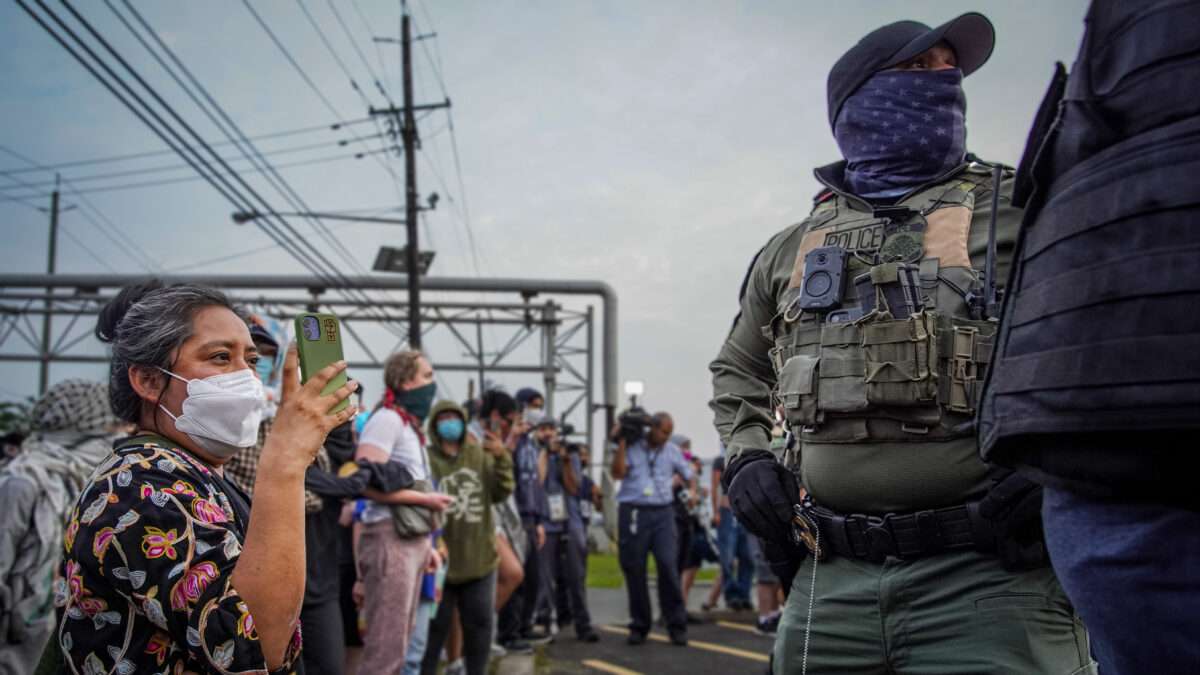
The First Amendment protects the right to film police officers in public, a principle established across most federal appeals courts. Yet Department of Homeland Security employees routinely harass and detain people exercising this constitutional right, according to civil liberties advocates and court precedent.
Federal courts from the Second, Third, Fourth, Fifth, Sixth, Seventh, Eighth, Ninth, and Eleventh Circuits have all affirmed that citizens can legally record law enforcement in public spaces. The Supreme Court has not directly addressed the question, but lower courts consistently reject charges against people filming police during traffic stops, arrests, and other official activities.
DHS agents, however, frequently ignore this legal consensus. Officers working for U.S. Customs and Border Protection, the Secret Service, and other DHS components have detained citizens, confiscated recording equipment, and threatened prosecution against people filming at borders, airports, and federal buildings. These incidents occur despite explicit legal precedent protecting such recording.
The pattern exposes a gap between constitutional law as interpreted by courts and law enforcement practice at the federal level. DHS does not have an official policy explicitly criminalizing recording, yet individual agents treat it as suspicious behavior warranting investigation. People have been questioned, intimidated, and sometimes arrested on unrelated charges after filming federal agents.
Civil liberties organizations argue DHS leadership bears responsibility for the discrepancy. Federal agencies receive training on constitutional limits to their authority, yet recording citizens remain targeted for interference. This creates a chilling effect on accountability and public oversight of government operations.
The disconnect reflects broader tensions between law enforcement culture and constitutional constraints. Even when courts establish clear rights, individual officers often operate under different assumptions about what the public can legally do. DHS employees viewing recording as inherently suspicious suggests institutional resistance to judicial limits on police power.
This gap between law and practice remains unresolved. Congress has not enacted legislation explicitly protecting recording of