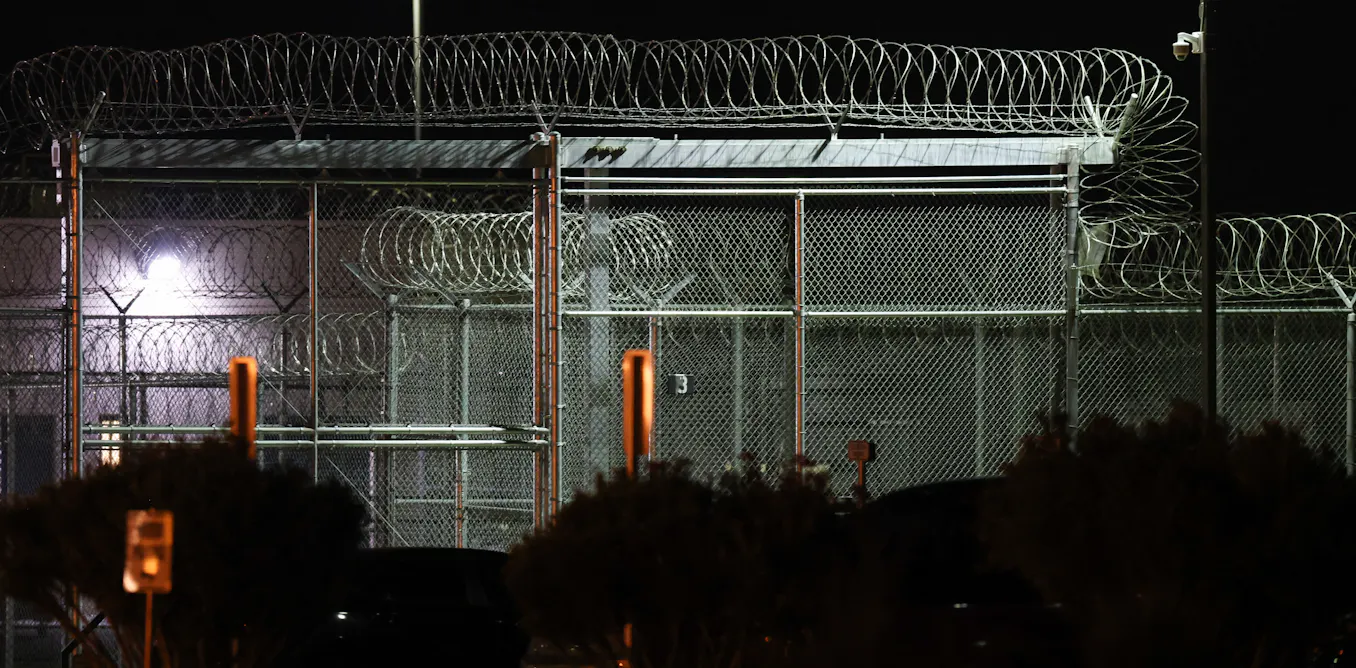
Researchers studying 150 historical cases of detention systems have identified criteria that define concentration camps, and their analysis concludes that U.S. Immigration and Customs Enforcement facilities meet those standards.
The scholarly definition centers on several key elements: mass detention of civilians, forced labor, inadequate living conditions, and systematic control by state authority. According to the research published in The Conversation, ICE detention facilities exhibit these characteristics. Detainees face overcrowding, limited access to medical care, and restricted movement. Many facilities operate under contracts that generate profit for private corporations, raising questions about financial incentives in the detention system.
The comparison draws from academic study of historical concentration camps, not Nazi-era camps specifically, though scholars use the term to describe systems of mass civilian detention across different periods and contexts. The research examines how detention becomes concentrated control rather than temporary holding.
Current ICE operations hold approximately 20,000 detainees daily across the country. Many facilities operate at capacity or beyond, with documented cases of inadequate sanitation, limited healthcare, and isolation conditions. Detainees often lack access to legal representation and face prolonged detention without trial.
The scholarly framework distinguishes between prisons designed for convicted criminals and detention systems targeting populations based on status alone. Immigration detainees have not been convicted of crimes. Some remain detained for years while their cases proceed through courts.
This research enters an ongoing political debate about immigration enforcement. Immigration advocates have used "concentration camp" terminology to describe conditions in certain facilities. The Biden administration initially increased detention capacity before reversing course, though detention numbers remained high. Republicans argue for stricter enforcement and expanded detention capacity.
The academic analysis provides a formal framework for evaluating detention systems against historical precedent, arguing that terminology matters when describing systematic confinement. Whether policymakers adopt this scholarly framework to reshape detention policy remains unclear, but the research establishes parameters for assessing whether