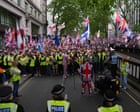
Far-right activist Tommy Robinson addressed tens of thousands of supporters at a London rally on Saturday, urging them to prepare for what he called the "battle of Britain." Robinson, whose legal name is Stephen Yaxley-Lennon, organized the second consecutive year of the "unite the kingdom" march in central London.
The event drew crowds despite turnout declining from the previous year. Organizers distributed flyers and speeches containing Islamophobic and ethnonationalist rhetoric throughout the rally. Robinson's inflammatory language reflected the broader messaging that characterized the gathering, positioning his movement as engaged in an existential conflict with forces he portrays as threatening Britain's future.
Robinson has built a following across the United Kingdom through social media and public appearances, consistently promoting anti-immigration and anti-Islam messaging. His activism has drawn criticism from civil rights groups and political figures across the ideological spectrum. Previous events he has organized have generated controversy and police scrutiny.
The rally occurs against a backdrop of heightened political polarization in Britain. Robinson and similar figures exploit public anxieties about immigration, integration, and national identity to mobilize supporters. His framing of social and political disagreements as a "battle" escalates rhetorical temperature and reflects a pattern of inflammatory language common among far-right activists.
Police maintained presence at the event. The gathering underscores how far-right movements continue mobilizing mass audiences in Britain despite legal restrictions on hate speech and public disorder. Robinson himself has faced multiple legal challenges, including convictions related to contempt of court and mortgage fraud.
The decline in year-on-year attendance suggests the movement's growth may have plateaued, though the continued ability to draw tens of thousands demonstrates the persistence of grievances his movement exploits. The event highlights ongoing tensions within British society regarding immigration policy, integration, and national identity that mainstream political parties have struggled to address comprehensively.