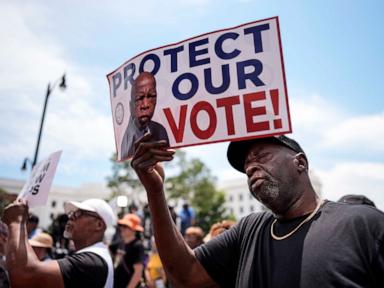
Thousands of voters and activists assembled in Montgomery, Alabama, this week to defend Black political representation threatened by redistricting efforts across the state. The rally targeted Republican-controlled redistricting maps that civil rights groups argue dilute Black voting power by splitting majority-Black districts into smaller pieces.
The gathering in Alabama's capital, a historic center of the Civil Rights Movement, carried symbolic weight. Montgomery hosted pivotal moments in the fight for voting equality, from Rosa Parks' bus boycott to the Selma to Montgomery marches. Organizers framed the current battle over congressional and legislative maps as a continuation of that decades-long struggle.
Civil rights organizations leading the effort contend that Alabama's new maps violate the Voting Rights Act by packing and cracking Black voters. Packing concentrates Black voters into fewer districts to minimize their overall influence. Cracking splits communities of color across multiple districts, reducing their ability to elect candidates of choice. The groups argue these tactics effectively erase gains made during the Civil Rights era.
Republican mapmakers defended the redistricting process as legally compliant and necessary to reflect population shifts. The GOP holds strong majorities in Alabama's legislature, giving them control over the mapmaking process under current law.
The rally underscored deepening partisan divisions over voting representation. Democrats and civil rights advocates nationwide have challenged Republican-drawn maps in multiple states, claiming systematic voter suppression. Republicans counter that Democrats similarly engaged in partisan gerrymandering when they held power.
Legal challenges to Alabama's maps appear likely. The Voting Rights Act remains the primary tool for blocking maps deemed discriminatory, though recent Supreme Court decisions have narrowed its scope. Lower courts in Alabama will decide whether redistricting violates federal law before maps face potential appeals to higher courts.
The Montgomery gathering reflected broader frustration among Democratic voters and Black communities over their declining influence in a state trending Republican. Organizers promised continued