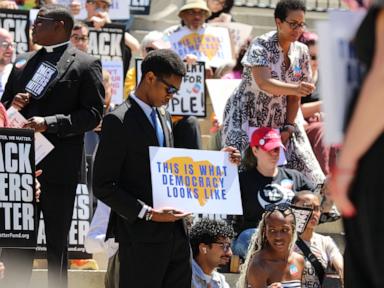
The Supreme Court's recent voting rights decision has triggered a coordinated response from civil rights organizations and Democratic lawmakers to protect Black electoral representation. The ruling, which weakened federal oversight of voting practices, creates an opening for states to implement voting restrictions that civil rights advocates warn will disproportionately affect Black voters and districts designed to ensure minority representation.
Civil rights groups including the NAACP and Common Cause have launched campaigns to mobilize voters and pressure Congress to pass legislation restoring protections under the Voting Rights Act. They argue the Court's decision dismantles decades of progress in preventing discrimination at the ballot box.
Democratic leaders in Congress have signaled support for strengthening voting rights protections. Senator Chuck Schumer and Representative Terri Sewell have introduced bills aimed at restoring the Voting Rights Act's preclearance requirement, which previously mandated federal approval for voting changes in jurisdictions with histories of discrimination.
The legal battle centers on Section 5 of the Voting Rights Act, a provision the Supreme Court gutted in 2013 by finding that the coverage formula relied on outdated data. The latest ruling continues that trajectory, further limiting federal enforcement mechanisms.
Republicans argue these provisions infringe on state sovereignty and point to modern voting access improvements as evidence that strict federal oversight is unnecessary. They contend that voting restrictions target fraud prevention, not voter suppression.
The clash reflects a fundamental disagreement over voting rights enforcement. Civil rights leaders counter that recent voting restrictions in Republican-led states disproportionately impact Black voters, noting limits on early voting, strict voter ID requirements, and gerrymandering that dilutes Black electoral power.
This mobilization represents a critical moment for voting rights litigation and legislation. Advocates emphasize that without federal safeguards, states can freely implement voting changes that reduce Black political representation. The outcome of this legislative push will determine whether federal voting rights protections strengthen