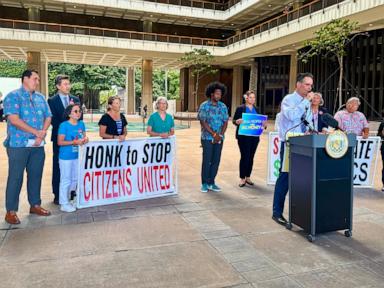
Hawaii Governor Josh Green signed legislation designed to limit corporate spending and anonymous funding in state elections, marking a direct response to the U.S. Supreme Court's Citizens United decision. The law represents one of the strongest state-level efforts to counteract the 2010 ruling, which removed restrictions on corporate campaign spending.
The bill requires corporations and limited liability companies making political contributions to disclose their ownership structures. It also mandates that dark money groups reveal their major donors when spending on Hawaii elections. These provisions close loopholes that previously allowed wealthy individuals and corporations to funnel contributions through shell organizations while remaining anonymous.
Green, a Democrat, framed the legislation as essential for restoring faith in democratic institutions. Hawaii joins a growing number of Democratic-led states attempting to regulate campaign finance through measures the federal government has resisted implementing since Citizens United. The ruling made it difficult to pass federal reform, as the conservative Supreme Court majority views spending restrictions as violations of free speech.
The law applies stricter disclosure standards than many states currently enforce. It creates penalties for organizations that fail to identify their funding sources, though enforcement mechanisms remain relatively modest. Supporters argue the transparency requirements will make voters aware of who finances political advertisements and ballot measure campaigns.
Republicans and business groups opposed the measure, contending it burdens legitimate political participation and may face constitutional challenges. The Chamber of Commerce warned the law could drive organizations away from Hawaii politics entirely.
Legal scholars remain divided on whether state-level dark money laws survive judicial review under Citizens United precedent. Some argue disclosure requirements differ substantively from spending bans and present stronger constitutional ground. Others predict federal courts will eventually strike down Hawaii's provisions as inconsistent with current First Amendment doctrine.
The law takes effect in 2026, giving the legislature time to develop implementing regulations. Hawaii becomes the latest state laboratory testing whether transparency rules can effectively counter Citizens United without directly violating Supreme Court doctrine.