# Summary
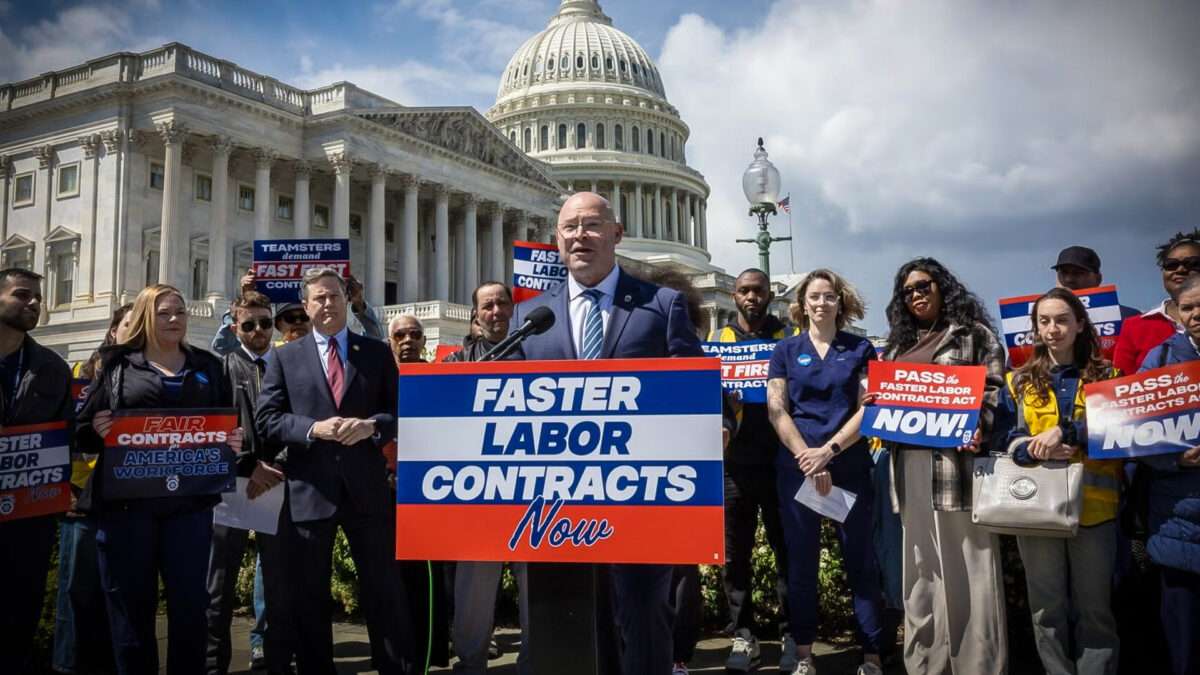
Senator Josh Hawley, R-Missouri, introduced the Faster Labor Contracts Act, which would impose strict timelines on collective bargaining negotiations. The bill sets deadlines forcing unions and employers to reach agreements within defined periods, with federal arbitration as the fallback mechanism if negotiations stall.
Hawley frames the legislation as pro-worker policy that prevents prolonged strikes and labor disputes. The senator argues that expedited contracts serve worker interests by reducing uncertainty and maintaining employment continuity. Republicans have positioned themselves as open to organized labor outreach, a strategic shift from traditional GOP messaging.
However, the bill draws sharp criticism from labor advocates and policy analysts. Critics argue that strict timelines undermine collective bargaining fundamentals. They contend that hard deadlines favor employers with deeper financial resources to outlast workers at the negotiating table. When federal arbitrators ultimately write contract terms, both sides lose genuine negotiating leverage.
The proposal reflects broader GOP tension over labor strategy. While Republicans court union workers, particularly in manufacturing and construction, traditional Republican economic philosophy emphasizes labor flexibility and management prerogatives. Hawley's bill attempts to thread that needle by appearing pro-worker while actually constraining union bargaining power.
The Faster Labor Contracts Act faces long odds in the Democratic-controlled Senate. Labor unions, core Democratic constituencies, oppose the measure. Even some Republicans question whether aggressive timelines serve their stated goal of attracting union voters.
The bill illustrates the Republican party's awkward positioning on labor. Genuine pro-union policy would strengthen organizing rights and bolster worker negotiating power. Hawley's approach does the opposite. It accelerates negotiations and injects government arbitration into disputes, effectively weakening the primary tool unions possess: the ability to withhold labor indefinitely. Whether styled as worker-friendly or not, mandatory timelines shift leverage toward employers.