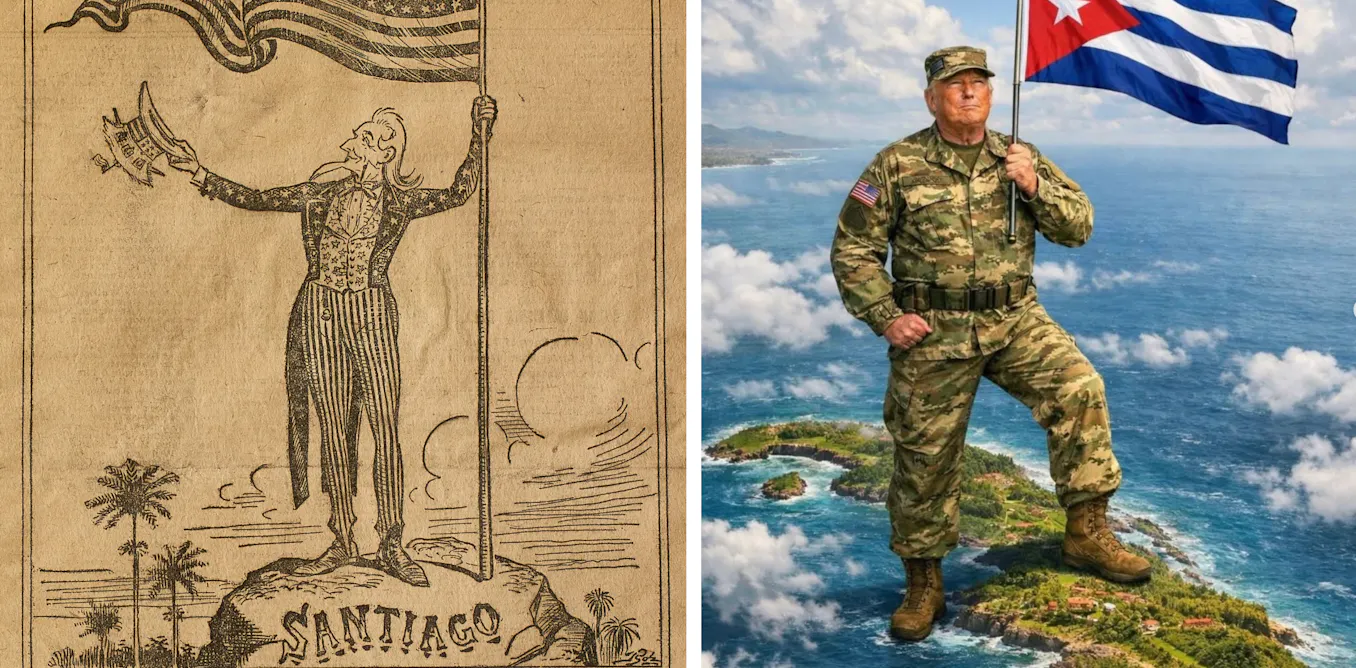
Cubans are turning to artificial intelligence to visualize fantasies of American military intervention, generating images that echo the colonial imagery of the late nineteenth century. The trend reveals desperation among portions of the Cuban population facing economic hardship and political constraints under the Castro regime's successor government.
AI-generated images depict US Navy ships in Havana harbor, American troops landing on beaches, and scenes resembling the Spanish-American War era. These visual fantasies circulate on social media platforms, reflecting how some Cubans view external intervention as a potential solution to domestic problems. The phenomenon underscores the narrowing of political horizons on the island, where economic crisis and restricted freedoms have created openness to foreign military action as a path toward change.
Cuba's economy faces severe shortages of fuel, medicine, and food. Power outages plague cities. The government maintains tight control over dissent and political opposition. These conditions have pushed segments of the population to explore unconventional outlets for expressing frustration, including digitally conjured images of American military presence.
The historical parallel carries weight. The Spanish-American War of 1898 resulted in American occupation and shaped Cuba's political development for decades. That era represented both promise and exploitation in Cuban memory. The current AI-generated imagery taps into this complex historical consciousness, suggesting that some Cubans view American intervention not as imperialism but as potential liberation from current hardship.
This trend illuminates how severe economic dysfunction and political repression can reshape public consciousness. When domestic institutions fail to deliver basic services or responsive governance, populations may paradoxically turn toward foreign military powers traditionally viewed as adversaries. The AI fantasies serve as digital expressions of this political exhaustion, offering imagined escape routes from present misery.
The images themselves remain largely symbolic rather than calls for actual military action, yet they document a genuine shift in how some Cubans conceptualize solutions to their crisis