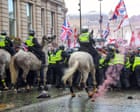
Prime Minister Keir Starmer's government has blocked eleven foreign far-right activists from entering the UK ahead of a Tommy Robinson rally scheduled for Saturday. Starmer directly attacked Robinson, accusing him of "peddling hatred and division."
The Home Office action reflects escalating tensions around Robinson's organizing efforts. Last year's Robinson-backed rally drew over 100,000 attendees, establishing him as a significant organizer within Britain's far-right movement. This weekend's event marks the second major mobilization under his banner.
The government's exclusion powers target non-British citizens deemed threats to public order or national security. The decision signals the Home Office will use immigration enforcement to disrupt far-right organizing. Starmer's explicit condemnation goes further, framing Robinson's activism as fundamentally destructive to social cohesion.
Faith leaders joined the political response. Justin Welby, the archbishop of Canterbury, called on people to "choose hope" before the rally. His intervention reflects church concern that Robinson's rallies amplify divisive rhetoric and inflame community tensions. Other religious leaders released statements opposing the event.
The barring of foreign activists indicates Starmer's administration believes international coordination strengthens Robinson's movement. By cutting off foreign support networks, officials aim to weaken the rally's reach and messaging capacity.
Robinson, a former English Defence League leader, has built a following through online content and street-level organizing. His recent rallies have drawn thousands and generated international media attention. The government response acknowledges his growing influence while attempting to contain it through targeted enforcement.
The contrast between last year's 100,000-person rally and this year's preemptive action shows shifting government posture. Rather than passive observation, authorities now actively obstruct Robinson's organizational efforts. Whether these measures reduce Saturday's turnout remains unclear, but they signal Starmer's readiness to deploy state