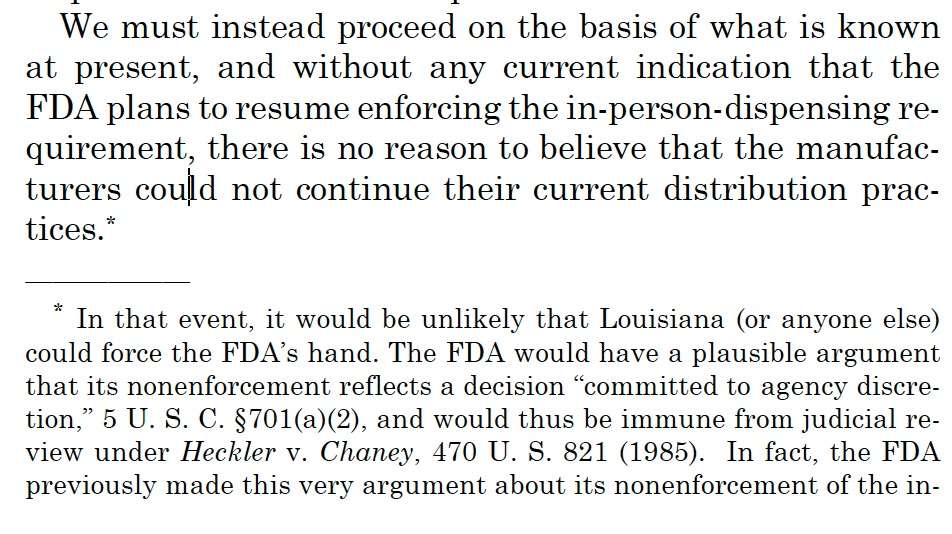
Justice Samuel Alito's recent dissent contained two unnumbered footnotes, a procedural oddity that has drawn attention from legal observers. The lack of numbering in a Supreme Court dissent represents an unusual departure from standard formatting practices that govern how justices present their written opinions.
Footnotes in Supreme Court opinions typically follow strict numbering conventions. They serve as critical tools for justices to reference case law, provide supplementary arguments, and distinguish their legal reasoning from the majority position. Alito's decision to include footnotes without sequential numbering raises questions about either a deliberate stylistic choice or a technical oversight in the opinion's preparation.
The reference to "Danco" in the headline suggests this dissent may relate to ongoing abortion-related litigation. The Supreme Court's decision in Dobbs v. Jackson Women's Health Organization in 2022 returned abortion regulation to the states, setting off a cascade of legal challenges. Danco Laboratories produces mifepristone, a medication central to medication abortion access disputes now pending before federal courts.
Alito authored the majority opinion in Dobbs, which eliminated the federal constitutional right to abortion. His subsequent dissents in abortion cases carry particular weight given his role in that landmark ruling. How he structures his written arguments, including the use of footnotes, can influence how his legal reasoning is interpreted by lower courts and future litigants.
The formatting irregularity, while seemingly minor, highlights ongoing tensions within the Court's operations. Justices' dissents have grown longer and more combative in recent years. Some observers view unusual formatting choices as signals of protest or emphasis, though Alito's office has not clarified the reasoning behind the unnumbered footnotes.
The substance of Alito's legal arguments matters more than footnote formatting, but procedural details in Supreme Court opinions often contain embedded messages about a justice's stance on the broader