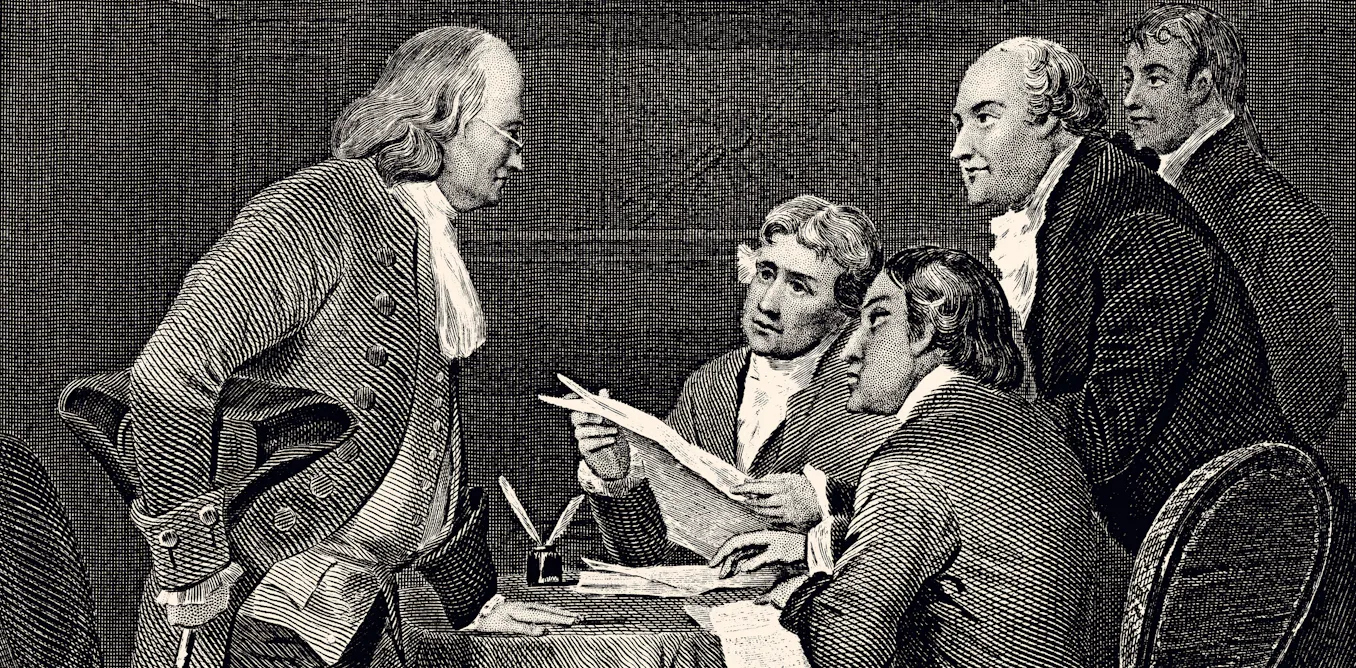
John Adams and Thomas Jefferson embodied the ideological rifts that defined early American governance, even as both men shaped the nation's founding documents and policies. The two founding fathers disagreed fundamentally on the Revolution's meaning and the proper structure of American democracy, yet collaborated on projects that built the republic.
Adams favored a stronger central government and worried that pure democracy would descend into mob rule. He advocated for checks on popular power through institutions like the Senate and presidency. Jefferson, by contrast, championed agrarian democracy and individual liberty, fearing concentrated executive authority and advocating for broader popular participation in governance.
These tensions played out during their lifetimes. When Jefferson served as Secretary of State under President George Washington, conflicts with Treasury Secretary Alexander Hamilton over economic policy and federal power exposed deep rifts within the administration. Adams, as Vice President, occupied an awkward middle ground. Later, Jefferson's election in 1800 represented a political earthquake that Adams viewed as dangerous, yet both men eventually reconciled.
The disagreement extended to slavery, westward expansion, and the role of the federal government in economic development. Adams represented New England mercantile interests and supported protective tariffs. Jefferson defended Southern agrarian interests and wanted minimal federal intrusion into state and local affairs.
Yet despite their profound differences, Adams and Jefferson demonstrated a capacity to work toward shared national objectives. They served together in the Continental Congress, collaborated on the Declaration of Independence, and ultimately recognized their common commitment to republican ideals, even when disagreeing about implementation.
Their correspondence in retirement showed two aging statesmen who respected each other's intellect while maintaining their philosophical distances. Both died on July 4, 1826, the fiftieth anniversary of the Declaration of Independence, a symbolic moment suggesting that competing visions of America could coexist within the founding generation's legacy.