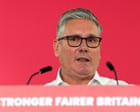
Labour's traditional union allies have publicly predicted that Prime Minister Keir Starmer will not lead the party into the next general election, delivering a sharp rebuke to his leadership amid mounting internal pressure.
Eleven Labour-affiliated unions, including Unite, Unison, and the GMB, plan to issue a joint statement Wednesday declaring that the party "cannot continue on its current path" under Starmer. The statement will assert that Labour must develop a plan to elect a new leader "at some stage."
The intervention marks an extraordinary break between Labour and its union base. These organizations represent hundreds of thousands of party members and donors, giving their public criticism outsized weight within Labour's power structure. Their statement comes after what the unions characterize as a damaging stretch for Starmer's leadership.
The timing intensifies pressure on a prime minister already battling internal dissent and party morale problems. Union backing has historically been central to Labour's political survival, providing both financial support and grassroots organizing capacity during election campaigns. When unions openly question a leader's viability, they signal deeper discontent that extends beyond Westminster.
The unions' language carries specific weight. Rather than calling for Starmer's immediate resignation, they frame a leadership transition as inevitable preparation, not emergency action. This approach allows unions to register protest without triggering an immediate party civil war, while still establishing a clear timeline expectation for Starmer's exit.
Starmer took office in July 2024 after Labour's landslide election victory. His premiership has deteriorated rapidly, with controversies over party donations, policy decisions, and internal management undermining his initial political capital. The union statement suggests Labour's founding constituency no longer believes he can restore the party's standing with voters before the next scheduled election.
For Starmer, the union intervention presents a cascading threat. Public union statements invite backbench Labour MPs to voice similar doub