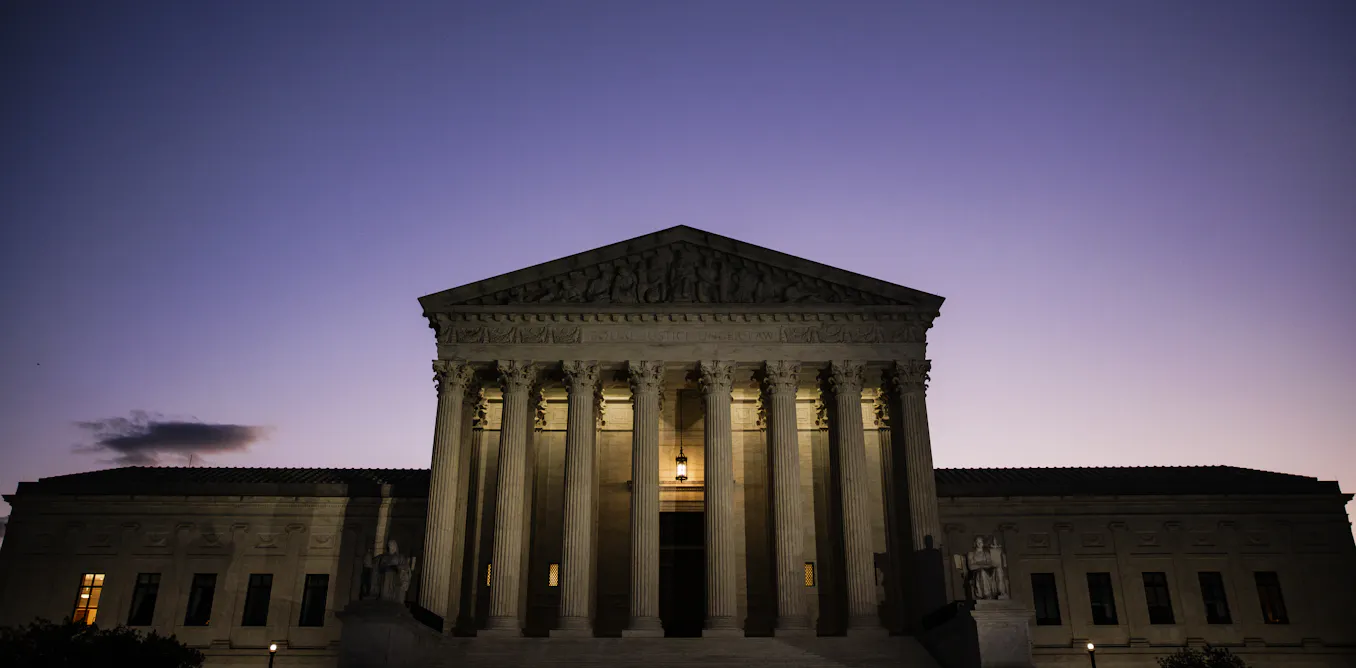
The Supreme Court ruled a Black-majority voting district in Louisiana unconstitutional, continuing a decades-long pattern of decisions that erode minority voting power. The ruling strikes down a congressional district deliberately drawn to ensure Black voters could elect a candidate of their choice, reflecting the court's rightward shift on racial issues.
This decision fits a troubling trajectory. Since the Voting Rights Act of 1965, courts have repeatedly narrowed protections for minority voters. The 2013 Shelby County v. Holder decision eliminated the requirement that jurisdictions with histories of discrimination obtain federal approval before changing voting rules, removing a critical safeguard. That ruling opened the door for states to implement stricter voter ID laws, purge voter rolls aggressively, and reduce early voting periods without federal oversight.
The Louisiana case centers on whether districts can be drawn with race as a primary factor to ensure minority representation. The court's conservative majority has signaled that such districts violate the Equal Protection Clause of the 14th Amendment, effectively treating efforts to remedy historical discrimination the same as discriminatory acts themselves. Justice Samuel Alito wrote that racial classifications deserve skepticism regardless of intent.
Civil rights advocates argue this logic ignores structural racism. Without intentionally creating opportunities for minority voters to elect representatives, they note, gerrymandering dilutes Black voting power through strategic line-drawing in other districts. States have long packed Black voters into a few districts or split them across many to minimize their collective influence.
The practical impact is immediate. Republican-controlled legislatures now face fewer barriers to redrawing districts in ways that reduce Black electoral power. Texas, Georgia, and other states are already altering maps. The court's reasoning suggests further restrictions on remedial racial classifications lie ahead.
This ruling reflects the court's embrace of what scholars call "colorblindness," an approach claiming race-conscious remedies perpetuate racial division. Critics counter