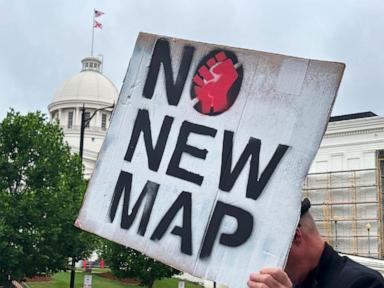
The U.S. Supreme Court blocked a lower court order requiring Alabama to maintain two majority-Black congressional districts, clearing the way for the state to redraw its House map before the 2022 midterm elections.
The court's action represents a major victory for Alabama Republicans seeking to eliminate one of the two districts. A federal panel had previously ruled that Alabama's congressional map violated the Voting Rights Act by packing Black voters into districts in a way that diluted their overall political power. The lower court ordered the state to create two districts where Black voters comprised the voting-age population majority.
Alabama appealed, and the Supreme Court's intervention halted that requirement without fully resolving the underlying constitutional question. The move signals that the court's conservative majority remains skeptical of aggressive enforcement of voting rights protections, continuing a trend evident in recent redistricting cases.
The practical impact proves immediate. Alabama can now proceed with creating a map containing only one majority-Black district instead of two. This shift likely strengthens Republican prospects in multiple seats, as concentrating Black voters in a single district reduces their influence in surrounding areas. Democrats lose potential pickup opportunities in a state trending increasingly Republican.
The Voting Rights Act Section 2 typically requires states to create districts where minority voters can elect representatives of their choice when doing so is feasible. The lower court found that Alabama possessed sufficient Black population spread across the state to support two such districts without extreme gerrymandering.
The Supreme Court's decision reflects broader judicial skepticism toward voting rights claims. Chief Justice John Roberts has previously questioned whether Section 2 enforcement has gone too far, and recent decisions suggest the court's majority shares this view. This case arrives alongside other voting rights disputes making their way through the federal judiciary.
Alabama now holds authority to redraw districts before voters head to the polls, reshaping the competitive landscape in ways favoring the state's Republican delegation.