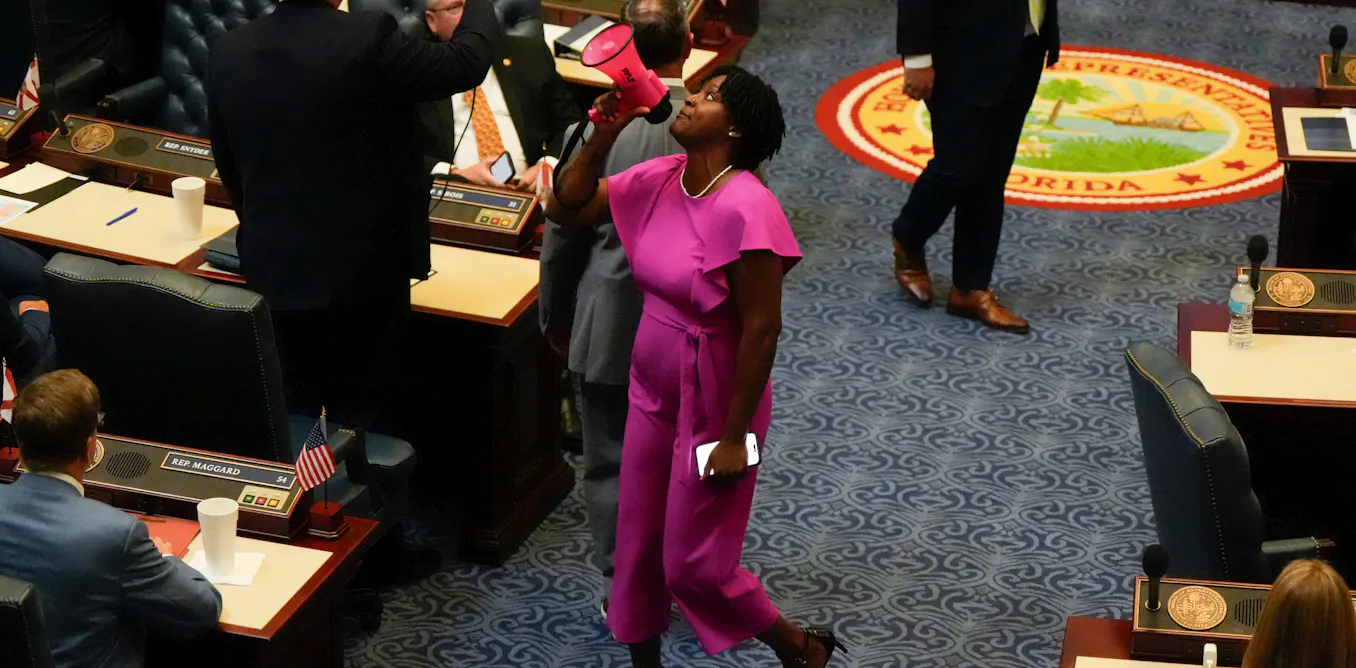
Governor Ron DeSantis pushed through aggressive redistricting maps in Florida despite public opposition to the effort. A recent survey reveals that while Florida voters disapprove of the gerrymandering, the issue ranks low on their priority list when deciding how to vote.
DeSantis championed new congressional district lines that heavily favor Republicans, redrawing maps to secure GOP advantages in competitive regions. The maps reduced Democratic-held districts and eliminated several swing seats, cementing Republican control of Florida's delegation.
Polling data shows Floridians recognize the problem. A majority of voters surveyed expressed concern about partisan gerrymandering and its effects on representation. They understand that manipulating district boundaries undermines democratic principles and entrenches political power.
Yet this disapproval has not translated into electoral consequence for DeSantis. Voters cite other issues as more pressing: the economy, healthcare costs, education funding, and inflation dominate their concerns. Gerrymandering, while unpopular in the abstract, remains abstract to most voters. They don't connect redistricting to their daily lives the way they do wage stagnation or property taxes.
This dynamic explains DeSantis' political calculus. The governor faced minimal electoral risk by pursuing maps that strengthen Republican representation. His base supports aggressive gerrymandering as a tool to maintain power. Swing voters and Democrats who oppose it lack sufficient motivation to make redistricting their voting issue.
The disconnect between public disapproval and electoral impact reveals a challenge for democracy reform advocates. Voters care about outcomes but struggle to prioritize the mechanisms that determine those outcomes. Gerrymandering affects representation for a decade, yet voters evaluate politicians on immediate pocketbook concerns.
DeSantis demonstrated that unpopular redistricting strategies can survive public opposition when voters rank them below other issues. His approach sets a precedent for future Republican leaders facing similar pressure