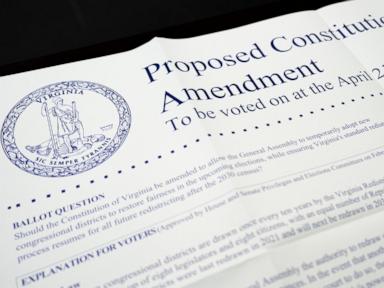
Democrats filed an emergency petition with the U.S. Supreme Court on Tuesday asking the justices to block a Virginia state court ruling that invalidated new congressional districts. The Virginia Supreme Court previously ruled that the redistricting plan violated the state constitution, ordering lawmakers to redraw the maps before the 2024 election.
The Democratic challenge centers on timing and federal election law. Democrats argue the Virginia court's decision comes too close to Election Day to safely implement new districts without disrupting the voting process. They contend that established Supreme Court precedent prohibits courts from altering electoral maps in the months immediately before an election, citing the principle that voter confusion and administrative chaos must be avoided.
Virginia's Republican-controlled legislature drew the congressional maps after the 2020 census. The state's Democratic-majority court found the districts violated Virginia's constitution by diluting the voting power of Black voters in certain areas. This prompted the redrawn map demand.
The emergency appeal invokes the "Purcell principle," a legal doctrine derived from a 2006 Supreme Court decision. The principle holds that courts should not alter election rules close to voting day. Democrats argue that implementing new congressional districts in Virginia at this stage would create practical problems for election administration and voter information.
Republicans countered that the state constitution's protections against racial gerrymandering must take precedence over federal timing concerns. They note that Virginia's courts had authority to enforce state constitutional requirements regardless of the election calendar.
The Supreme Court faces a choice between competing judicial values: respecting state courts' constitutional interpretations versus avoiding late-election disruptions. The justices have previously applied the Purcell principle to block lower court interventions near elections, though the doctrine remains contested among legal scholars and the court's liberal justices.
The outcome affects Virginia's competitive congressional races and establishes precedent for how federal courts should handle state court redistricting orders issued near elections