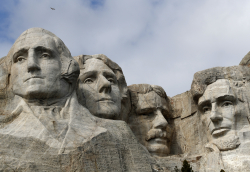
George Washington remains the foundational figure of American governance and national identity more than two centuries after his death. Henry "Light-Horse Harry" Lee III's 1799 eulogy, delivered during national mourning following Washington's December death, distilled the first president's legacy into a single phrase: "First in war, first in peace, and first in the hearts of his countrymen."
Lee's words captured three dimensions of Washington's historical impact. First came his military leadership during the Revolutionary War, where he commanded the Continental Army against British forces and secured American independence. Second was his role in establishing the republic itself, from presiding over the Constitutional Convention to serving as the first president and setting precedents for executive power and restraint. Third was his symbolic place in American consciousness as an embodiment of patriotism and virtue.
Washington's decision to resign his military commission and return to private life after the Revolutionary War distinguished him from other military leaders of the era who sought power. His voluntary relinquishment of authority established the principle of civilian control over the military, a cornerstone of American constitutional governance. Similarly, his two-term presidency and refusal to seek a third term created a tradition that Congress later codified in the Twenty-Second Amendment.
The phrase Lee chose has endured across generations. It appears on monuments, in history texts, and in public memory as shorthand for Washington's unparalleled influence on American institutions and values. His leadership during moments of crisis established patterns of governance that persisted long after his administration ended.
Contemporary political figures frequently invoke Washington's example when discussing patriotism, bipartisanship, and devotion to constitutional principles. His farewell address, warning against political factionalism and foreign entanglements, remains quoted by politicians across the ideological spectrum. Washington's legacy transcends partisan divisions because he predates the modern party system and embodied principles that transcend particular policy disputes.