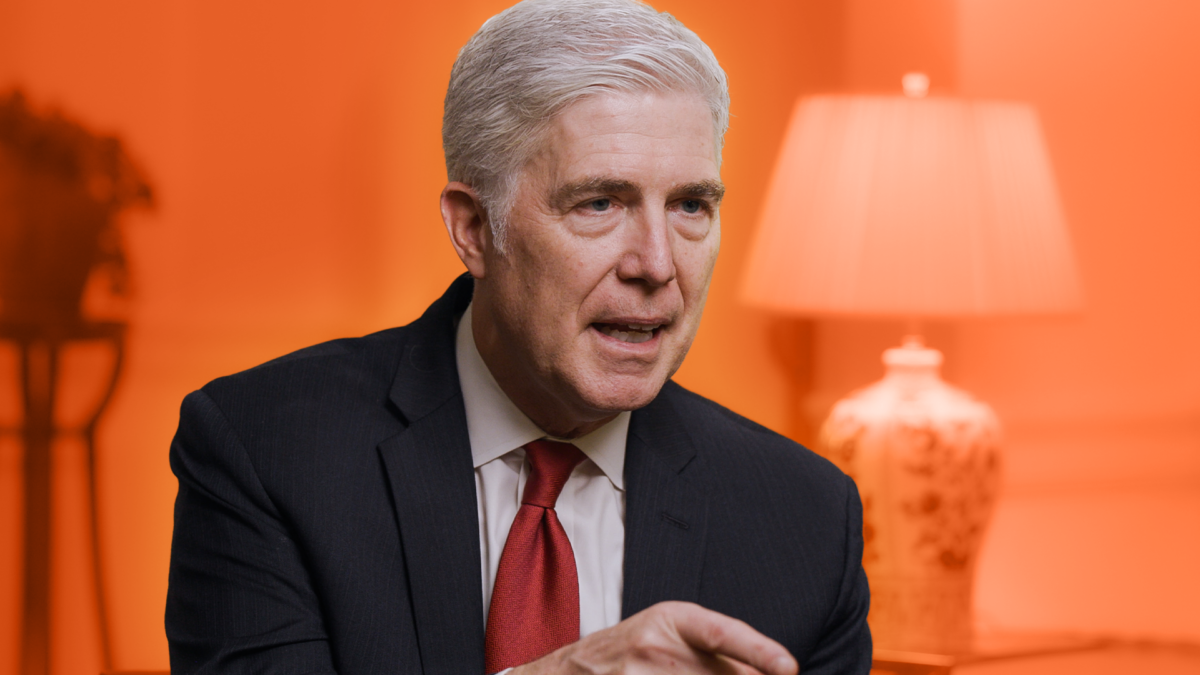
Neil Gorsuch's description of America as a "creedal nation" has triggered backlash from right-wing influencers and commentators who reject the notion that the country's founding principles transcend ethnic or racial identity. The Supreme Court justice grounded his characterization in America's founding documents and the ideal that the nation unites people around shared civic values rather than blood or ancestry.
The Dissident Right responded with hostility, viewing Gorsuch's framing as naive or deliberately obscuring what they see as America's true character. These voices argue the country has always been fundamentally defined by its European heritage and that emphasizing civic nationalism over ethnonationalism represents a betrayal of authentic American identity.
This reaction exposes a widening philosophical divide within American conservatism. Gorsuch's position aligns with traditional constitutional conservatism and the view articulated by figures like Ronald Reagan, who celebrated America's founding as based on universal principles of liberty and individual rights open to all people regardless of origin. This understanding animated the conservative legal movement for decades.
The Dissident Right's critique represents a sharp departure from this framework. By rejecting the creedal nation concept, these influencers position themselves outside the mainstream conservative tradition that has defined American republicanism since its inception. Their emphasis on ethnic or racial particularity contradicts the Declaration of Independence's assertion that "all men are created equal" and the Constitution's promise of equal protection under law.
Gorsuch's remark carries weight because it comes from a justice widely respected among originalist conservatives. His willingness to publicly defend the creedal nation concept in the face of right-wing anger demonstrates that the original constitutional vision remains contested within conservative circles.
The broader stakes are clear. If the right-wing movement increasingly embraces ethnonationalist rather than civic-nationalist principles, it distances itself from the philosophical foundations that have sustained American