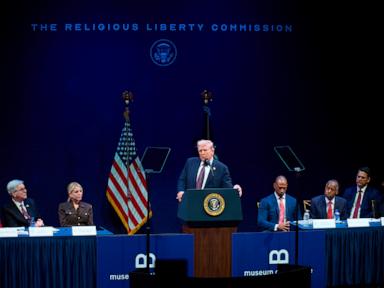
President Donald Trump's Religious Liberty Commission is moving forward with recommendations that could fundamentally reshape the relationship between religion and government in America. The commission, which has conducted hearings over the past year, is preparing to challenge the traditional separation of church and state that has governed U.S. policy since the Supreme Court's 1962 Engel v. Vitale decision.
The commission's work reflects Trump's commitment to evangelical and religious conservative voters who have long sought greater influence over federal policy. Members have signaled they will recommend loosening restrictions that prevent religious organizations from receiving federal funding and direct government support for explicitly religious activities.
The potential recommendations include allowing federal dollars to fund faith-based schools and social programs without restrictions on religious instruction. This directly contradicts decades of establishment clause jurisprudence that prohibits government entanglement with religion. The commission has also explored greater latitude for religious expressions in public spaces and workplaces.
This effort carries significant political implications. Conservative religious groups have championed such changes for decades, viewing separation of church and state as hostile to religious freedom. Trump's administration has already moved in this direction through executive orders protecting religious exemptions and supporting faith-based hiring practices.
However, the commission's recommendations will face legal obstacles. Courts have consistently upheld establishment clause protections, and Democratic lawmakers have opposed the commission's direction. Civil liberties organizations warn that abandoning church-state separation could disadvantage secular citizens and minority religions.
The commission's final recommendations arrive at a moment when religious Americans remain a core Trump constituency. Whether Congress acts on these proposals, or whether courts uphold any legislative changes, remains uncertain. The work signals how fully Trump has aligned his administration with religious conservative priorities and how willing he is to challenge constitutional precedents his opponents consider settled law.