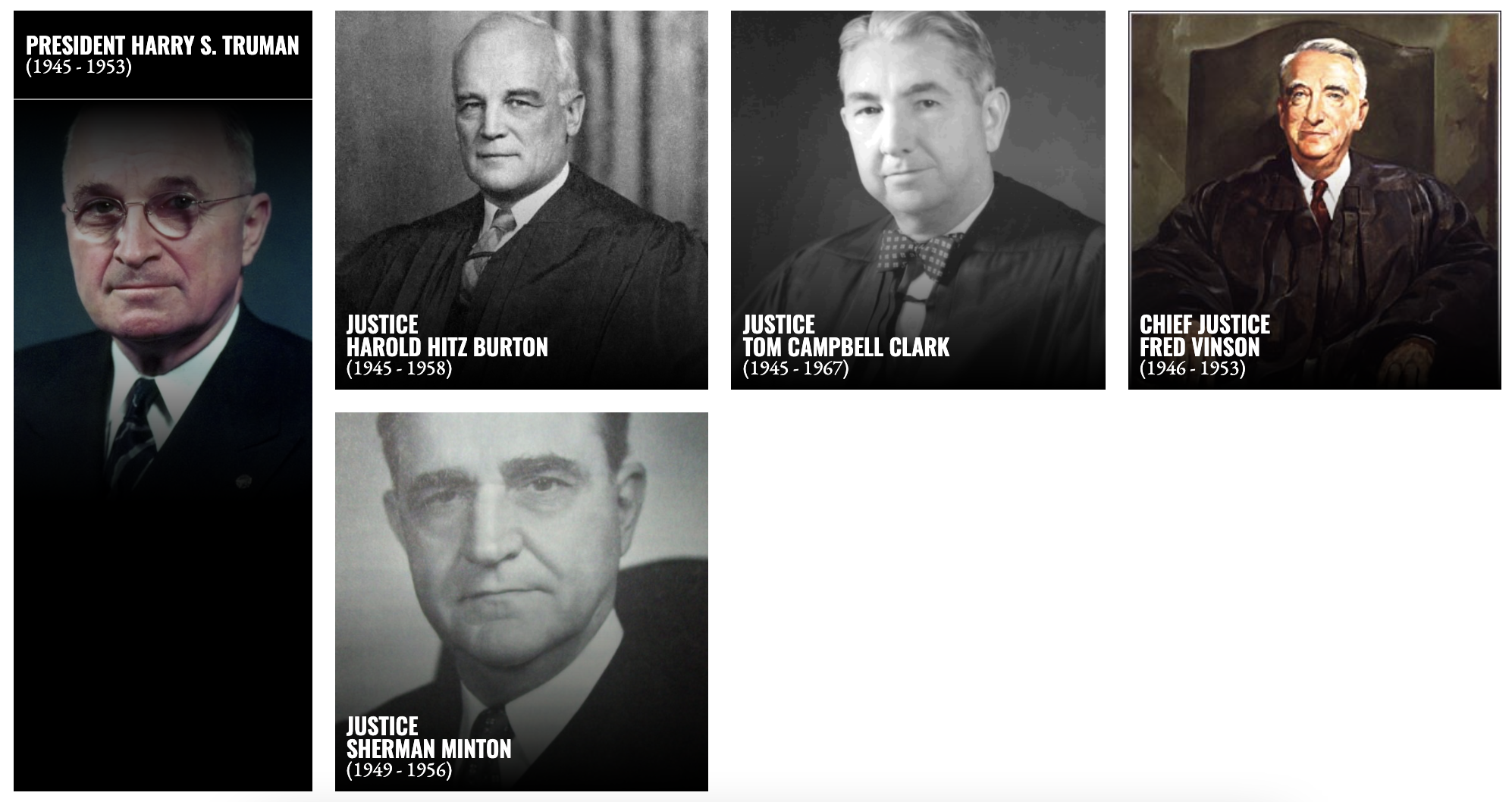
# Supreme Court History: Truman's Judicial Legacy Shaped by Four Appointments
Harry S. Truman, born May 8, 1884, left a lasting imprint on the Supreme Court through four strategic appointments that reflected his judicial philosophy and the political demands of the post-World War II era.
Truman elevated Fred M. Vinson to Chief Justice, along with appointing three other justices to the bench. These selections came during a transformative period when the Court faced questions about federal power, civil rights, and the scope of presidential authority. Truman's choices positioned the Court to address the constitutional questions emerging from the Cold War and the nascent civil rights movement.
The appointments reflected Truman's pragmatic approach to governance. As a Democrat from Missouri who assumed the presidency after Franklin D. Roosevelt's death in 1945, Truman needed justices who understood executive power while respecting constitutional limits. His judicial picks generally aligned with moderately expansive views of federal authority, though they produced mixed results on controversial issues.
Truman's Court appointments gained lasting significance as his justices participated in decisions shaping American law for decades. The composition of the bench during his tenure set the stage for later developments in constitutional interpretation, influencing how subsequent Courts would handle executive power, federalism, and rights questions.
The Truman appointments illustrate how presidential choices about the judiciary ripple through history long after a president leaves office. A single president's four Court seats translate into years of judicial influence. Truman's legacy on the bench extended well beyond his 1953 departure from the White House, demonstrating why Supreme Court appointments remain among a president's most consequential decisions.
THE BOTTOM LINE: Truman's four Supreme Court appointments positioned the Court to address post-war constitutional questions and extended his judicial influence decades beyond his presidency.