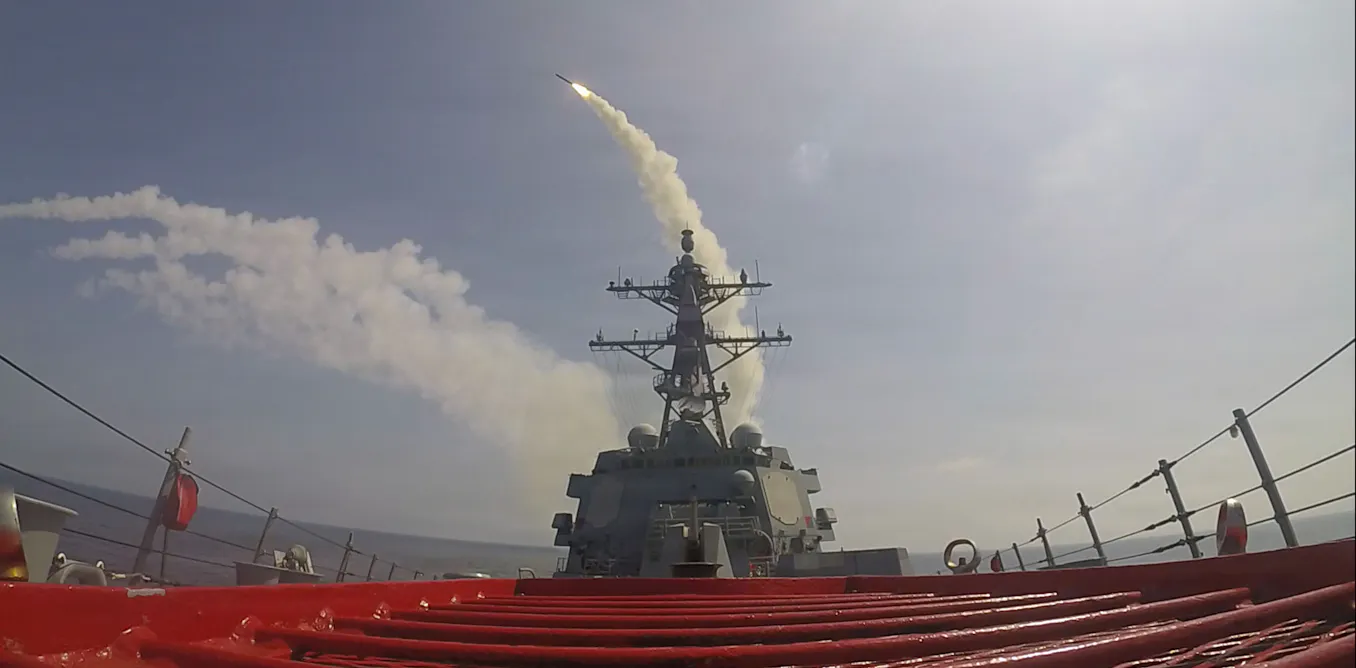
The U.S. military's weapons transfers to Ukraine have raised hard questions about America's ability to sustain prolonged conflicts while maintaining deterrence against rivals like China and Russia.
U.S. officials have shipped billions in military aid to Ukraine since Russia's 2022 invasion, including Patriot air defense systems, HIMARS rocket launchers, and thousands of artillery rounds. This drawdown has exposed gaps in American weapons production capacity. The Pentagon operates with decades-old factories designed for Cold War-era output levels, not the sustained production demands of a modern peer conflict.
The Ukraine aid effort reveals a stark reality. While the Defense Department commands nearly $1 trillion annually, much of that funding goes to personnel, operations, and maintenance rather than manufacturing new weapons. The U.S. industrial base for certain munitions operates far below surge capacity. Production of 155mm artillery shells, the most common round used by Ukraine, has accelerated but still trails consumption rates.
Russia and China are watching closely. Both adversaries note that America's weapons stocks decline faster than factories can replenish them. This observation carries strategic weight. China calculates America's ability to fight a two-front war or sustain Taiwan's defense against simultaneous Russian adventurism. Russia itself faces similar constraints, which explains its reliance on North Korean and Iranian ammunition supplies.
Pentagon planners now prioritize increasing munitions production. Congress has allocated billions to expand shell manufacturing, but factories require years to reach full capacity. The military also faces pressure to maintain adequate stockpiles for potential conflicts in Europe and the Indo-Pacific while draining supplies to Ukraine.
This dynamic reshapes military strategy. The U.S. cannot assume it can replace lost weapons quickly in a Taiwan scenario or sustained European conflict. Allied nations recognize this vulnerability and push for increased defense spending. European NATO members have accelerated procurement and production investments, partly because American supplies cannot cover all allied