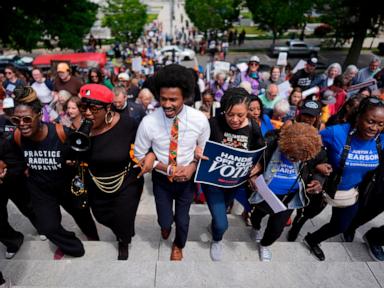
South Carolina Republicans are moving forward with redistricting plans after the U.S. Supreme Court's recent ruling that restricts how states can draw majority-Black congressional districts. The decision limits the use of race as a primary factor in creating such districts, a shift that carries direct consequences for Democratic representation in the South.
The Supreme Court ruling struck down the precedent that allowed states to prioritize racial demographics when designing congressional maps. This decision empowers Republican-controlled legislatures across Southern states, including South Carolina, to redraw districts in ways that dilute Black voting power. Republicans view this as an opportunity to reshape electoral maps before the 2026 midterm elections.
South Carolina holds six congressional seats. The state currently has one majority-Black district, a seat held by Democrat Jim Clyburn, a senior House member. Under new redistricting guidelines, Republicans could fragment this district by spreading Black voters across multiple districts, effectively reducing Democratic electoral prospects in the state.
The redistricting push extends beyond South Carolina. Alabama, Georgia, Louisiana, and other Republican-controlled Southern states are similarly reassessing their maps. This coordinated effort reflects how the Supreme Court ruling has emboldened GOP strategists to pursue aggressive partisan and racial gerrymandering strategies.
Democrats warn this represents a fundamental threat to minority representation. The ruling reverses decades of precedent establishing that states could use race-conscious districting to remedy historical discrimination. Critics argue the decision strips away protections for Black voters in the South, where Black participation in voting remains demographically concentrated.
The timing matters. With redistricting efforts beginning now, new maps will govern elections for the next decade. Republicans see an opportunity to cement advantages before the 2026 races and beyond. South Carolina's move signals how quickly GOP legislatures are capitalizing on the Supreme Court's conservative majority to reshape electoral geography in their favor.
THE BOTTOM LINE: The Supreme Court's ruling opens